
Amsinckia vernicosa
Amsinckia vernicosa
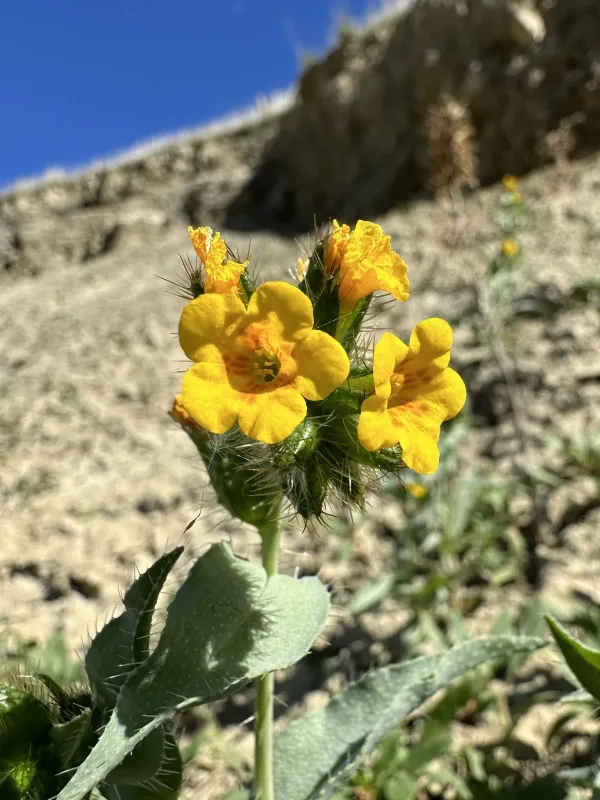
Description
Sowing dates
Amsinckia vernicosa, commonly known as a type of fiddleneck, is an annual plant belonging to the Boraginaceae family. It is widely recognized in agriculture as a persistent weed that invades fields, competes for resources, and creates difficulties for farmers.
The germination of this species is highly dependent on seasonal precipitation, typically occurring in the autumn or early spring. Seeds possess a dormancy mechanism, allowing them to persist in the soil seed bank for extended periods until moisture levels are adequate.
Emergence often coincides with the planting of winter cereals, placing the weed in direct competition with the crop. The rapid vegetative growth of Amsinckia allows it to quickly form a rosette, which shades out surrounding young crop plants.
The life cycle of the plant is relatively short, and it can complete its reproductive phase before the main crop reaches maturity. This characteristic ensures the replenishment of the soil seed bank before harvest time.
Managing the plant requires understanding its growth cycles, as the timing of germination can vary depending on local weather patterns and soil moisture profiles within the field.
Growing requirements
This plant thrives in well-drained soils, often favoring sandy or loamy textures where it can establish a deep taproot. It is highly adapted to semi-arid regions and can tolerate low-fertility conditions where other plants struggle.
Sunlight exposure is a critical requirement for Amsinckia, as it is a heliophilous species that performs best in open, disturbed environments. It does not tolerate heavy shading from dense crop canopies.
The plant demonstrates a remarkable tolerance for moisture stress, enabling it to survive in regions with erratic rainfall. While it prefers neutral pH levels, it is resilient enough to adapt to a range of slightly acidic or alkaline soil environments.
Optimal temperature for growth ranges between temperate and subtropical norms. It is capable of surviving mild frosts, which often gives it a head start over spring-sown crops in many agricultural zones.
Proper field management, such as maintaining soil structure and managing weed-free borders, is essential to minimize the risk of infestation in agricultural landscapes.
Main diseases and pests
The primary concern regarding Amsinckia vernicosa is its toxicity to livestock. The plant contains pyrrolizidine alkaloids, which can cause chronic liver damage in horses and cattle if consumed either in fresh forage or contaminated hay.
Weed control strategies are generally focused on chemical interventions during the early rosette stage. Once the plant develops a stem, it becomes significantly more resistant to standard herbicide treatments due to its physical structure.
Mechanical control, such as tillage, must be handled carefully, as it can bring dormant seeds to the surface and trigger a new cycle of emergence. Integrated pest management (IPM) is the most recommended approach.
Seed contamination of cereal crops is a major economic threat, as it reduces the value of the harvested grain. Specialized cleaning equipment is often required to remove the weed seeds from the crop lot effectively.
Preventative measures remain the most effective, including the use of certified weed-free seed lots and cleaning agricultural machinery between fields to prevent the spread of this invasive species.