
Bristly fiddleneck
Amsinckia tessellata
Description
Growing requirements
Bristly fiddleneck (Amsinckia tessellata) is an annual herb within the Boraginaceae family. In agronomy, it is strictly classified as a significant weed that infests crops and pastures rather than an agricultural commodity.
This plant exhibits remarkable adaptability to arid environments. It thrives in open, sunny habitats with sandy or rocky soils, utilizing its deep root system to access groundwater in regions with limited rainfall.
The species is native to western North America, particularly the arid parts of the United States and Mexico. Due to its invasive nature, it has spread to other continents where it frequently colonizes disturbed agricultural lands.
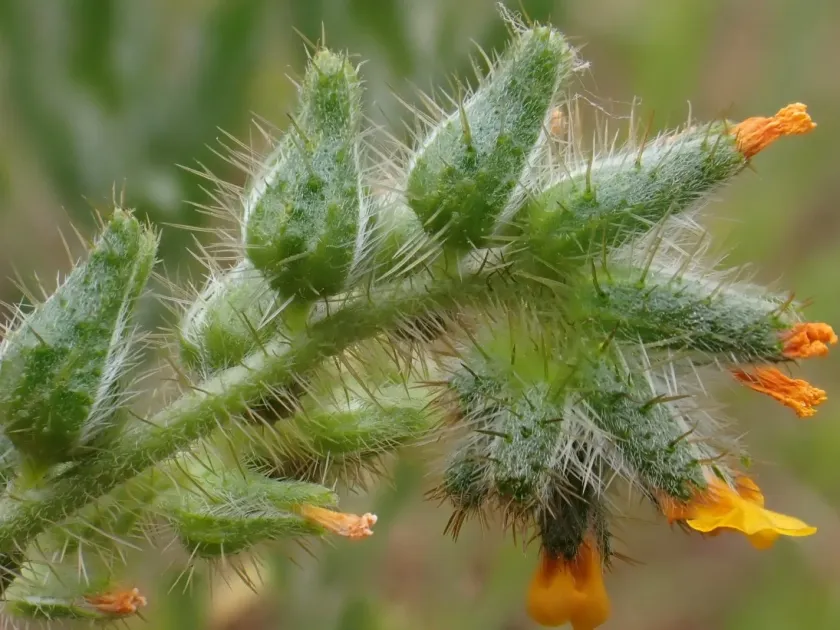
Botanically, Amsinckia tessellata is distinguished by its stiff, bristly hairs that provide mechanical defense. The inflorescence is a classic scorpioid cyme, characteristic of the borage family, which unfurls as the plant matures.
Agricultural value is non-existent as the plant is toxic to livestock. It contains pyrrolizidine alkaloids that can cause severe liver damage to horses and cattle when ingested through contaminated hay or grain feed.
Main diseases and pests
The primary threat is its aggressive competitive nature, which displaces crops and reduces overall field productivity. It competes heavily for water and sunlight, significantly affecting the yield of small grains and pastures.
A major biological challenge is the prolific seed production. A single plant can produce vast quantities of seeds that can remain viable in the soil for many years, necessitating long-term monitoring and persistent eradication programs.
Pests and diseases are not significant factors for controlling this weed population, as the plant is extremely resilient. However, it can act as an alternative host for viruses that can migrate to cash crops, causing economic loss.
Integrated weed management is necessary to control the bristly fiddleneck. This includes pre-emergent herbicide applications, mechanical cultivation, and ensuring that harvested grain is free from contamination.
Failure to control infestations can lead to significant economic losses for farmers due to grain dockage at the point of sale and potential veterinary costs associated with livestock exposure to contaminated forage.