
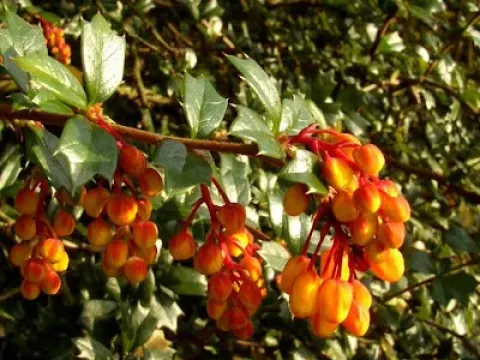
Yunnan barberry
Berberis yunnanensis
Yunnan barberry (Berberis yunnanensis) is a perennial deciduous shrub belonging to the Berberidaceae family. This species originates from the mountainous regions of Yunnan province in China, which dictates its preference for specific habitats.
What the section contains
Yunnan barberry
The plant is botanically recognized by its dense habit, stiff branches armed with sharp three-parted spines, and brilliant red berries that ripen in the autumn. The foliage is leathery and provides excellent seasonal texture in landscape design.
Regarding soil requirements, the species thrives in fertile, well-drained loams. It is adaptable to various soil pH levels but performs best in neutral to slightly acidic conditions with adequate moisture.
The plant requires a location with full sun to partial shade. In warmer regions, some afternoon shade is recommended to prevent leaf scorch and ensure the plant maintains its structural integrity.
Cultural practices include spring fertilizing with slow-release organic matter and periodic pruning. Shaping should be done after flowering or in early spring to encourage dense growth and maintain the desired size.
Powdery mildew is a common fungal threat, particularly in regions with high humidity or stagnant air. Proper spacing during planting is essential to ensure adequate airflow and reduce the risk of infection.
Rust diseases can impact the aesthetics of the shrub. Using copper-based fungicides as a preventative measure in early spring is standard practice for maintaining healthy barberry populations.
Aphids are the primary insect pests affecting the tender new growth of Yunnan barberry. If an infestation is detected, insecticidal soap or specialized systemic insecticides should be applied.
Scale insects may colonize the woody stems, draining the plant's vitality. Regular monitoring of the bark and manual removal of scale clusters can prevent severe damage to the shrub.
Consistent irrigation without waterlogging the roots is crucial to prevent root rot. A healthy, stress-free plant is generally resilient and less susceptible to the aforementioned pests and diseases.