
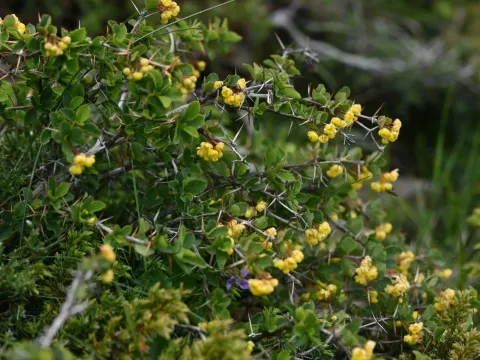
Aetna barberry
Berberis aetnensis
Aetna barberry (Berberis aetnensis) is a perennial shrub belonging to the Berberidaceae family. It is a distinctive botanical species native to the volcanic slopes of Mount Etna in Sicily, known for its extreme resilience.
What the section contains
Aetna barberry
The plant exhibits a slow growth habit, forming dense, thorny clusters that are ideal for natural hedging or rocky terrain landscaping. Its botanical structure allows it to withstand high wind speeds and intense UV radiation typical of high-altitude habitats.
Environmental requirements for this shrub are specific: it thrives in well-draining, rocky, and mineral-rich soils. It is intolerant of waterlogged soil conditions, which frequently lead to root system degradation and plant loss.
Optimal growth is achieved in sunny, open locations. The plant is perfectly adapted to the Mediterranean climate, where it benefits from a period of summer dryness followed by cooler, moist winters, allowing it to maintain its vigor.
Agricultural practices for the cultivation of Berberis aetnensis involve very light pruning to maintain its natural shape and periodic mulching with inorganic materials like gravel to replicate its natural scree slope habitat.
The primary health threats to Aetna barberry include fungal infections such as powdery mildew, which thrive in conditions of high relative humidity and poor air circulation. Proper spacing between individual plants is essential.
Insect pests, primarily aphids, can infest the young foliage during the spring growth flush. Integrated pest management, focusing on biological controls or horticultural oils, is recommended to preserve the plant's health without chemical overuse.
Rust diseases affecting leaves can appear in areas with high summer rainfall. Removing and destroying infected foliage is the most effective way to prevent the spread of spores to healthy portions of the shrub.
Root pathogens represent a significant threat if drainage is not managed correctly. Monitoring the moisture levels of the soil substrate is critical to avoid the onset of Phytophthora or other water-borne rots.
Regular surveillance for signs of chlorosis or leaf curling is recommended as part of routine maintenance. Identifying problems early allows for localized treatment, ensuring the plant retains its aesthetic and structural value.