
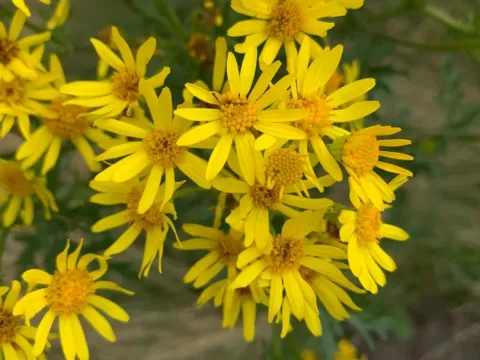
Jacobaea
Jacobaea Mill.
The genus Jacobaea (Jacobaea) is a member of the Asteraceae family. Historically integrated into the Senecio genus, these plants are now recognized as a distinct taxonomic group defined by specific floral and leaf characteristics.
What the section contains


Jacobaea
The native range of these plants extends across Europe, parts of Asia, and Northern Africa. They typically colonize open habitats such as meadows, pastures, and roadsides, showcasing a robust nature adapted to temperate climatic conditions.
Soil requirements for Jacobaea include well-drained substrates. While they are resilient in various soil types, they thrive most effectively in nutrient-rich, sunny environments where competition for light is minimized.
Agronomically, these plants are considered significant due to their biological resilience and rapid seed dispersal mechanisms. Their lifecycle involves a vegetative rosette stage followed by the development of branched inflorescences carrying numerous yellow disc florets.
Utilization of the genus is primarily ornamental due to the presence of pyrrolizidine alkaloids, which make the biomass toxic to livestock. Therefore, in an agricultural context, management focuses more on containment rather than cultivation as a standard crop.
Pest pressure is characterized by specialist insects, most notably the Cinnabar moth (Tyria jacobaeae), which feeds extensively on the foliage during its larval development stage.
Pathogen threats include fungal infections such as white blister rust (Albugo tragopogonis) and various forms of leaf spots, which can be mitigated by maintaining proper plant spacing and ensuring good airflow.