
Common ragwort
Jacobaea vulgaris Gaertn.
Description
Growing requirements
Common ragwort (Jacobaea vulgaris Gaertn.) is a well-known member of the Asteraceae family. This biennial or perennial herb is widely distributed across Europe and temperate Asia, often found in pastures, roadsides, and abandoned fields.
The plant thrives in a variety of soil types, ranging from light sandy soils to heavy clays. It prefers open, sunny locations where it can effectively colonize disturbed ground and compete with native grasses for nutrients and water.
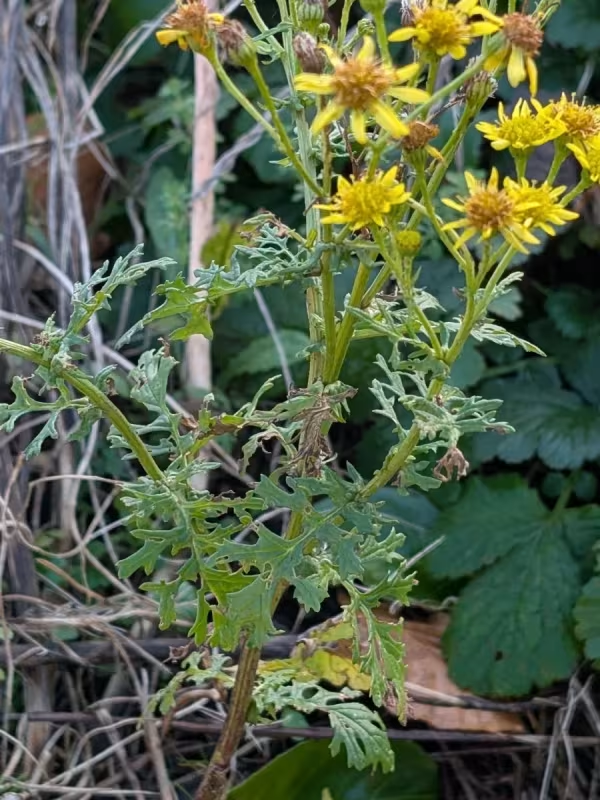
Morphologically, it develops a basal rosette of leaves in the first year of its life cycle. In the second year, it produces a stout, erect stem that grows up to 120 cm in height, bearing dense clusters of yellow, daisy-like flower heads.
The success of this plant as a weed is largely due to its immense seed production. Each mature plant can release up to 150,000 wind-dispersed seeds, which allows for rapid colonization of adjacent agricultural lands.
From an agricultural standpoint, the plant is strictly regarded as a harmful weed. It contains toxic pyrrolizidine alkaloids that cause liver damage in horses, cattle, and sheep, making it a critical threat to livestock health and feed quality.
Main diseases and pests
In its native range, the plant is managed by several specialized insects, such as the cinnabar moth (Tyria jacobaeae). These biological agents help keep populations in check, but often prove insufficient on heavily infested agricultural sites.
Chemical control involving selective herbicides is a common practice for large-scale infestations. Applications should be timed to hit the plant while it is still in the rosette stage to minimize the risk of seed dispersal later in the season.
Mechanical removal, including pulling or digging, is highly effective for small patches, but it is vital to extract the entire root system. If fragments of the root are left in the soil, the plant can regenerate, leading to a recurring management issue.
Pasture management is the most sustainable way to prevent the establishment of ragwort. Maintaining dense grass cover and avoiding overgrazing limits the availability of open soil required for ragwort seeds to germinate and thrive.
Farmers must be vigilant, especially during haymaking. Because the toxins remain potent even after the plant has been dried, contaminated fodder poses a severe, often lethal risk to animals throughout the winter feeding period.