
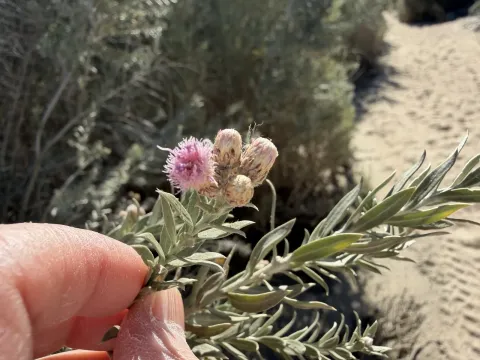
Silky camphorweed
Pluchea sericea
Propagation of Pluchea sericea in agricultural practice is primarily achieved through seeds or stem cuttings in a controlled nursery environment. The seeds exhibit good germination rates but require specific conditions, including proper light exposure to trigger the germination process.
What the section contains
Silky camphorweed
Sowing in a protected environment is recommended in early spring, ensuring that seedlings can develop a robust root system before the onset of extreme summer temperatures. A sandy, well-draining substrate is ideal to mimic the natural soil conditions of the species.
Vegetative propagation via cuttings should be performed during the active growth phase of the plant. Rooting is most successful in high-humidity conditions with ambient temperatures maintained between 22 and 25 degrees Celsius.
Once established in the nursery, young plants are transplanted to their permanent location with a spacing of at least 1.5 to 2 meters. This distance allows for optimal crown development and adequate airflow between individual bushes.
Initial irrigation is necessary during the first season until the plants are fully acclimated to the field environment and have developed deep roots capable of tapping into subsurface moisture reservoirs.
Pluchea sericea belongs to the Asteraceae family and is a classic xerophyte, perfectly adapted to survival in arid regions and desert valleys. It demonstrates exceptional resilience in environments where other crops fail to survive.
The crop thrives in well-draining sandy or loamy soils. It is notably tolerant of saline conditions, making it an excellent candidate for the restoration of degraded, salty soils in arid agricultural zones.
Abundant sunlight is a critical requirement, as the plant is heliophilic and suffers significantly under shaded conditions. Insufficient light exposure leads to spindly growth and a decrease in the plant's overall vitality and aesthetic appeal.
Temperature requirements align with subtropical and arid climates. The shrub is highly heat-resistant, although it may require protection from prolonged, severe frosts during its early years of growth to avoid tissue damage.
Nutritional needs are relatively low, yet the application of small amounts of potassium-based fertilizers can enhance cellular integrity and increase the plant's resistance to environmental stress factors.
In its native habitat, Pluchea sericea is highly resistant to local pathogens, but under intensive cultivation, excessive irrigation can create favorable conditions for root rot and other fungal issues.
Powdery mildew is rarely observed and typically only occurs in poorly ventilated, overcrowded plantings. Ensuring adequate spacing and air circulation is the primary method of preventing this condition.
Pests such as aphids may occasionally attack the tender new growth during the spring. The use of organic insecticides or biocontrol agents is highly effective and safe for managing these populations without impacting the ecosystem.
Root rot is primarily a consequence of waterlogged soil. Maintaining proper soil drainage and aeration is essential to keep the root system healthy and productive throughout the plant's life cycle.
The plant shows a high level of resilience to common viruses, making it a low-maintenance option for integrating into sustainable farming systems where minimizing chemical inputs is a priority.
Harvesting of leaves and young shoots should be conducted during the peak of the growing season, typically mid-summer, when the concentration of secondary metabolites is at its highest.
The harvest should be performed using sharp, clean tools, ensuring that the main structure of the shrub is left intact to allow for subsequent regeneration and future harvest cycles.
Drying of the harvested material must take place in a shaded, well-ventilated area. Direct sunlight should be avoided to prevent the degradation of heat-sensitive compounds within the plant tissues.
Store the dried material in paper bags or wooden containers in a dry place. When kept under proper conditions, the raw material can maintain its quality and potency for up to 24 months.
In agricultural applications, such as windbreaks or soil stabilization projects, harvesting is often minimal, focusing instead on periodic pruning to maintain the plant's structural integrity and desired density.