
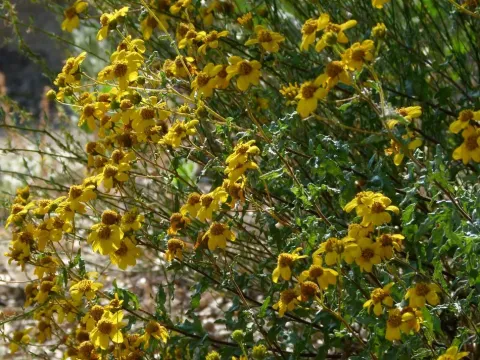
Viguiera
Viguiera
Viguiera is a heat-loving crop that should be planted only after the soil has thoroughly warmed up, ensuring there is no danger of frost.
What the section contains


Viguiera
In temperate climates, the ideal sowing period is late May when soil temperatures at a depth of 5-10 cm reach 12-15 degrees Celsius.
Seeds should be sown at a shallow depth of 2-3 cm to ensure they make firm contact with the moist soil for optimal germination rates.
A wide-row planting scheme is recommended, with row spacing of approximately 60-70 cm to provide enough space for individual plant development.
Seed preparation, including cleaning and proper chemical dressing, is essential to increase field emergence and promote initial plant vigor.
As a member of the Asteraceae family, Viguiera requires high levels of solar radiation and should be grown in open, well-lit locations.
While the plant exhibits significant drought tolerance, it requires consistent soil moisture during critical growth stages to maximize biomass production.
The ideal soil for Viguiera should be light in texture, well-drained, and maintain a neutral or slightly acidic pH balance for nutrient availability.
Balanced fertilization, particularly with phosphorus and potassium, helps strengthen the root system and improves the overall structural integrity of the plant.
Waterlogging must be avoided, as the root system is sensitive to low oxygen levels caused by poor drainage or high water tables in the soil profile.
The total yield of Viguiera is largely dependent on photosynthetic efficiency and the availability of essential macro-nutrients during the active vegetative growth phase.
Under optimal management practices, the crop demonstrates high potential for biomass accumulation, making it suitable for multiple harvests per season.
Early harvest stages are crucial, as delayed harvesting can lead to excessive lignification, which reduces the nutritional quality of the forage material.
Seed yield varies significantly based on pollinator activity and weather conditions during the critical flowering period, affecting seed set and maturity.
The application of growth regulators can help optimize development and significantly boost total biomass yield per hectare in commercial production systems.
Viguiera is susceptible to powdery mildew infection, especially in environments with high humidity levels and limited air circulation between plants.
Root rot diseases are common when the crop is grown in compacted or overly wet soils, necessitating strict drainage management and site selection.
Pests such as aphids pose a significant threat by colonizing young leaves and stems, which can stunt plant growth and weaken their immune systems.
Larvae of soil-dwelling pests, like cutworms, can severely damage the stem base, leading to plant collapse and increased vulnerability to secondary infections.
Effective crop rotation and sanitation measures are the primary defense strategies to prevent the buildup of pathogens and insect populations over time.
For forage production, harvest should be conducted during the budding phase to ensure the highest concentrations of digestible nutrients in the biomass.
Harvesting should be timed carefully to balance quantity and quality, preventing the plant from reaching full maturity where fiber content dominates.
Seed harvesting is conducted once the flower heads reach full physiological maturity, indicated by darkening of the seeds and reduced moisture content.
Modern harvesting machinery should be properly adjusted to minimize shattering losses and ensure the collection of clean, high-quality seed material.
Post-harvest conditioning, including rapid drying, is vital to ensure long-term stability and to prevent microbial spoilage during storage.