
Viguiera annua
Viguiera annua
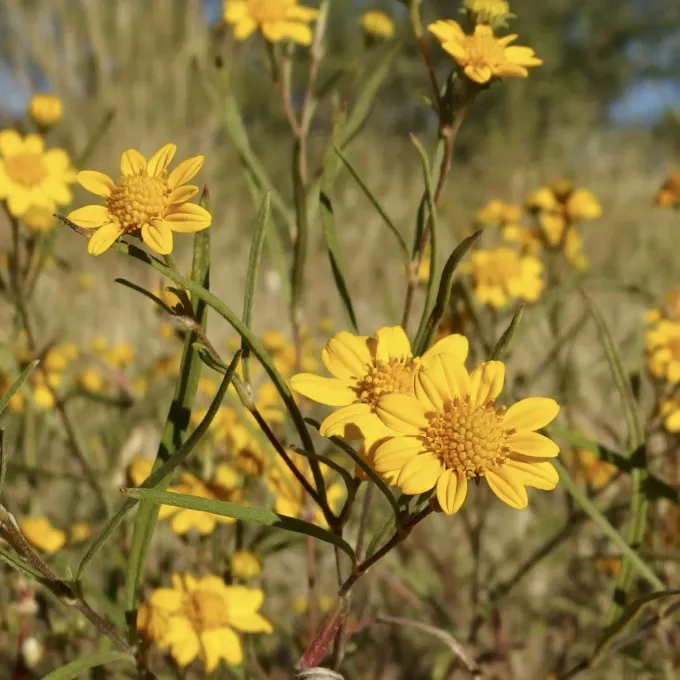
Description
Sowing dates
Viguiera annua, a member of the Asteraceae family, requires warm soil temperatures for successful germination and early establishment.
The optimal sowing time is late spring, once the danger of frost has passed and soil temperatures consistently remain above 15–18°C.
Seeds should be planted at a shallow depth of approximately 2–3 cm, ensuring they remain in contact with moisture for rapid and uniform emergence.
Row spacing is typically kept between 45 and 60 cm, providing enough space for the plants to reach their full biological potential without excessive competition.
Proper seedbed preparation is essential to eliminate weed pressure and create a friable soil structure that promotes healthy root development.
Growing requirements
This crop thrives in full sun, requiring exposure to direct sunlight for the majority of the day to ensure optimal growth and flower initiation.
It prefers well-drained, fertile soil types such as sandy loams, and it performs best in neutral to slightly alkaline soil pH levels.
While relatively drought-tolerant once established, supplemental irrigation during peak growth stages significantly enhances biomass yield.
Nutrient management is crucial; moderate applications of nitrogen-based fertilizers during the vegetative stage encourage healthy foliage growth.
The plant is highly sensitive to waterlogging, so maintaining good soil structure and drainage is critical to prevent root system stress.
Main diseases and pests
Common pests affecting this crop include aphids and spider mites, which typically colonize the plant during prolonged dry and hot periods.
Fungal pathogens, particularly those causing powdery mildew or leaf spots, can develop if humidity remains high and air circulation is restricted.
Root rots may occur if the plant is grown in heavy, compacted soils that do not allow for adequate water percolation and aeration.
Integrated pest management strategies, such as biological control and timely monitoring, are recommended to maintain plant health throughout the season.
Keeping the field free of debris and ensuring proper plant spacing helps minimize the risk of spreading soil-borne diseases between plants.