
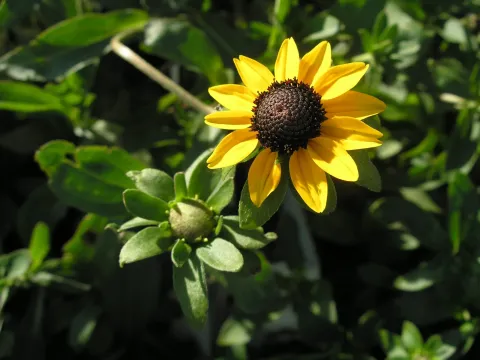
Deam's coneflower
Rudbeckia deamii
Rudbeckia deamii is a perennial herbaceous plant belonging to the Asteraceae family. In temperate climates, seeds should be sown indoors in March or April to ensure the plant blooms within its first year of growth.
What the section contains
Deam's coneflower
For direct sowing outdoors, the best time is late May, once the danger of night frost has completely passed. The seeds require light for germination, so they should be sown on the surface or covered with a very thin layer of substrate.
To improve germination rates, many agronomists recommend cold stratification of the seeds for about 2–3 weeks at 4°C. This practice increases the energy of germination and results in more uniform plant density in the field.
The optimal soil temperature for germination is between 18°C and 20°C. Seedlings typically appear within 14 to 21 days, after which they require bright light to prevent leggy growth and ensure a strong, healthy stem structure.
Transplanting should occur when the seedlings develop their first two true leaves. When planting in the garden, a spacing of 40x40 cm or 50x50 cm is recommended to allow for adequate air circulation and root system expansion.
Rudbeckia deamii prefers sunny locations, as shade can cause stems to become weak and significantly reduce the intensity of flowering. While the species is quite light-loving, it can adapt to various open-garden settings.
This crop is not overly demanding regarding soil type, performing best in fertile, loamy soils that are rich in organic matter. Good drainage is essential, as waterlogged conditions in winter can be fatal to the root system.
The plant demonstrates high drought tolerance, but for optimal decorative results, regular watering is required during the bud formation phase. Insufficient moisture during this period can lead to smaller flower heads and premature wilting.
Regular cultivation of the soil between rows is recommended to improve oxygen access and moisture retention. Mulching the base of the plant helps maintain a favorable microclimate and suppresses weed growth in the early stages.
Balanced mineral fertilizers should be applied at the beginning of the growing season. Nitrogen-based fertilizers should be avoided once flowering begins to ensure the plant directs its energy toward bloom production rather than excessive foliage growth.
The primary pests affecting this plant include leaf-eating insects, such as cutworms and leafrollers. During prolonged periods of hot, dry weather, spider mites may become a nuisance by colonizing the underside of the leaves.
Diseases often develop due to improper moisture management or poor air circulation. Powdery mildew is a common concern, manifesting as a white, powdery coating on the foliage, especially in humid or crowded garden conditions.
Grey mold (Botrytis) may also occur during periods of high humidity and rainfall. To mitigate this risk, it is important to remove faded flower heads promptly and ensure that the plants are spaced properly to allow for air movement.
Nematodes can sometimes infect the root system, resulting in stunted growth and yellowing of the foliage. Crop rotation and using certified healthy planting material are the most effective preventive measures against these soil-borne threats.
Systemic fungicides and insecticides can be used as a last resort if an outbreak occurs. Regular monitoring of the foliage and stems is critical for early detection and localized control of both pests and diseases.
Flower heads intended for floral arrangements should be harvested when they are fully open. These flowers are highly valued in the cut-flower industry for their long vase life and vibrant, hardy appearance.
For seed collection, the flower heads should be left on the stems until they are completely dry. Once the seed pods turn a dark, brittle color, they are ready to be harvested for future propagation.
After harvesting, the seeds must be dried in a well-ventilated, shaded area. They should be stored in paper envelopes in a cool, dry place to maintain viability for the following planting season.
At the end of the growing season, the above-ground parts of the plant should be pruned back close to the soil level. This helps the plant conserve energy for winter survival and encourages vigorous regrowth in the spring.
In landscaping, some gardeners prefer to leave the seed heads on the stems throughout the winter. This provides structural interest to the garden and serves as a natural food source for various bird species during the colder months.