
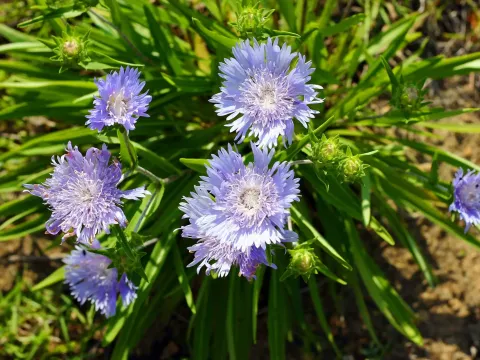
Stokesia
Stokesia
Sowing Stokesia laevis seeds is typically performed in late winter or early spring under greenhouse conditions. Seeds often require a period of cold stratification at approximately +4 °C for about a month to break dormancy and ensure uniform germination.
What the section contains
Stokesia
Seeds should be sown in a well-draining, sterile seed-starting mix at a shallow depth of about 0.5 cm. Maintaining a consistent temperature of +18...+20 °C and high humidity is crucial during the initial stages of development to prevent seed desiccation.
Germination can be irregular and slow, often taking several weeks to complete. Once the seedlings develop their first true leaves, they should be pricked out into individual pots to encourage the development of a robust, healthy root system before transplanting.
Transplanting into the garden should only occur after the risk of frost has passed. Plants need to be spaced 30–40 cm apart to ensure good airflow, which is vital for preventing fungal diseases in the foliage and stems during the growing season.
Vegetative propagation by division is an excellent alternative to seed sowing, especially for preserving cultivars. This should be done in early spring as new growth begins, ensuring that each division has a portion of healthy roots and growing shoots.
Stokesia, a member of the Asteraceae family, originates from the southeastern United States. It is a hardy perennial that thrives best in full sun, where it receives at least six to eight hours of direct light, which is essential for prolific flowering.
The plant requires fertile, well-draining soil with a neutral to slightly acidic pH. Avoiding heavy clay soils that retain moisture is critical, as stagnant water around the roots can lead to winter rot and significantly shorten the plant's lifespan.
While established plants show some tolerance to short periods of drought, consistent moisture during the growing season results in superior performance. Supplemental watering is recommended during hot, dry spells, focusing on the soil rather than the foliage.
Hardiness is generally reliable in temperate zones, but in colder regions, a thick layer of organic mulch is recommended during winter. This protects the crown of the plant from freeze-thaw cycles that can heave the root system out of the ground.
Deadheading spent blossoms is an important cultural practice that prevents the plant from diverting energy into seed production. This simple maintenance task encourages repeat flowering and maintains a tidy, aesthetic appearance in the landscape.
Root rot is the most significant threat to Stokesia, primarily caused by excessive soil moisture and poor drainage. Ensuring the planting site is elevated or properly amended with sand or organic material can mitigate this risk effectively.
Powdery mildew may manifest as a white dusting on the leaves when air circulation is poor or humidity levels are high. Keeping the planting area clear of debris and ensuring proper spacing between plants is the best preventative strategy.
Slugs and snails are notorious for feeding on the tender foliage of young Stokesia plants. Implementing bait traps or using non-toxic barriers around the base of the plant can protect the foliage from extensive cosmetic and structural damage.
Aphid infestations can occur on young flower buds and succulent tips during periods of rapid growth. Targeted use of insecticidal soaps or neem oil is usually sufficient to control these pests without harming beneficial insects in the garden.
Nematodes can occasionally pose a serious threat to the root system, causing stunted growth and leaf yellowing. If an infestation is suspected, removing and destroying the entire plant, including the surrounding soil, is the only way to contain the issue.