
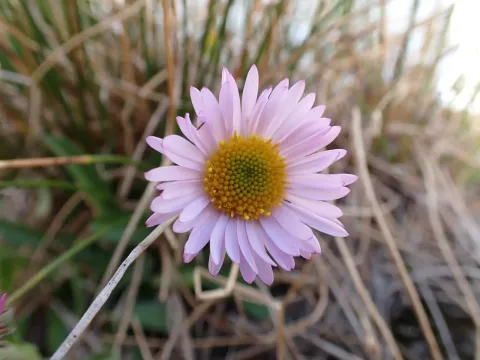
Subalpine fleabane
Erigeron peregrinus
Subalpine fleabane (Erigeron peregrinus) is a perennial plant belonging to the Asteraceae family, native to the mountainous regions of Western North America.
What the section contains
Subalpine fleabane
Propagation is typically achieved through seeds sown in late winter or early spring, requiring a period of cold stratification to break dormancy successfully.
For container-grown seedlings, use a well-draining soil mix and keep temperatures consistent until germination occurs, which usually takes two to three weeks.
Direct sowing in outdoor settings is feasible in late spring once the danger of severe frost has completely passed and the soil has warmed up.
Division of mature clumps in early spring or autumn provides an efficient way to propagate the plant while maintaining specific vigor and clonal consistency.
This species thrives in cool, moist, and well-drained soils, ideally with a neutral to slightly acidic pH, reflecting its natural subalpine habitat.
Full sun is preferred for optimal blooming, although in warmer climates, light afternoon shade is beneficial to prevent the foliage from scorching.
Moisture management is critical; the soil should be kept consistently damp but never waterlogged, as stagnant water is detrimental to the root system.
The plant is highly frost-hardy and does not require special winter protection in most temperate climates, making it an excellent choice for rock gardens.
Low levels of fertilizer are generally sufficient; an annual application of compost or balanced slow-release fertilizer in early spring supports healthy growth.
Powdery mildew is the most common fungal issue, particularly in environments with poor air circulation or high humidity levels around the foliage.
Pests such as aphids and spider mites can occasionally affect the plant during dry spells, potentially leading to leaf yellowing and reduced vigor.
Slugs and snails can cause damage to the tender growth of young seedlings, necessitating monitoring or the use of protective barriers during early spring.
Root rot, caused by various pathogens in poorly drained soils, can be a major threat; therefore, site selection with proper drainage is essential.
Regular monitoring and physical removal of affected plant parts are recommended as primary management practices before resorting to chemical controls.
Subalpine fleabane is primarily cultivated for ornamental purposes, enhancing rock gardens, borders, and meadow-style plantings with its distinct flowers.
Harvesting for floral arrangements should occur when flowers are in the bud stage to ensure longer vase life and better preservation of the petals.
For seed collection, the flower heads should remain on the stalks until they turn brown and dry, signaling that the achenes are fully mature.
Deadheading faded blooms throughout the growing season encourages the plant to produce a secondary flush of flowers, extending the visual appeal.
Post-season maintenance involves trimming the stems back close to the ground after the foliage begins to wither, preparing the plant for dormancy.