
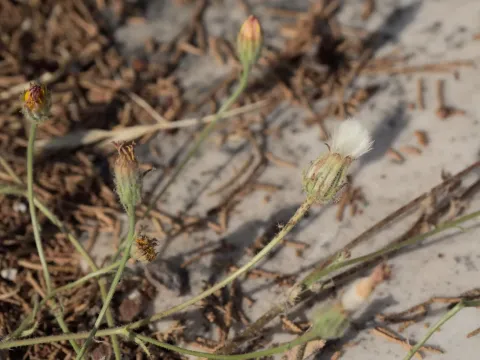
Stinking hawksbeard
Crepis foetida
Crepis foetida, commonly known as stinking hawksbeard, belongs to the Asteraceae family and is typically grown as an annual or biennial herb.
What the section contains
Stinking hawksbeard
Sowing should take place in spring once the soil temperature consistently reaches 8–10 degrees Celsius, ensuring favorable conditions for rapid seed germination.
Seeds are very small, so they should be sown shallowly, ideally at a depth of 1–2 centimeters, to allow sufficient light penetration for the seedlings.
For optimal development, row spacing of approximately 45 centimeters is recommended to reduce competition and allow for easier maintenance and weed management.
Proper seedbed preparation is essential; the soil should be finely worked and free from perennial weeds to ensure the young plants are not choked out during establishment.
This species thrives in sunny, open locations with moderate climates, making it well-suited for cultivation in temperate regions of Europe and Western Asia.
It prefers well-drained, fertile sandy-loam or loamy soils with a neutral pH, which provide the best balance between moisture retention and aeration.
Adequate soil drainage is critical, as waterlogged conditions quickly lead to root rot and other fungal diseases that can decimate the entire crop.
While the plant shows good resilience to temporary drought conditions once established, supplemental irrigation during dry periods is beneficial for plant vigor.
Excessive fertilizer application should be avoided, particularly nitrogen, as it can encourage overly rapid, soft growth that is more prone to lodging and disease.
The primary concern for farmers is powdery mildew, which can spread quickly in stagnant air conditions, especially when planting density is too high.
Early-stage seedlings are highly attractive to flea beetles, which can cause significant damage to young leaves, requiring monitoring during the first weeks.
Aphids are common pests that colonize the leaves and flower stalks, reducing the vitality of the plant and sometimes acting as vectors for viral diseases.
Root-feeding nematodes may occasionally affect the crop, particularly in fields where soil hygiene has not been maintained or proper crop rotation is ignored.
Integrated pest management, including the use of beneficial insects and biological controls, is highly recommended to maintain a healthy and sustainable crop.
Harvesting is best performed during the peak flowering phase to ensure the maximum concentration of active botanical compounds is preserved in the tissues.
The aerial parts of the plants are harvested by cutting; this must be done in dry, sunny weather to ensure the material remains clean and moisture-free.
Drying should take place in a shaded, well-ventilated area with temperatures kept below 40 degrees Celsius to prevent the loss of essential oils and aroma.
When collecting seeds, vigilance is required as the heads shatter easily once mature, meaning harvest timing should be precise to minimize seed loss.
Storage should be in a cool, dry place within breathable containers to prevent moisture accumulation and ensure long-term stability of the harvested product.