
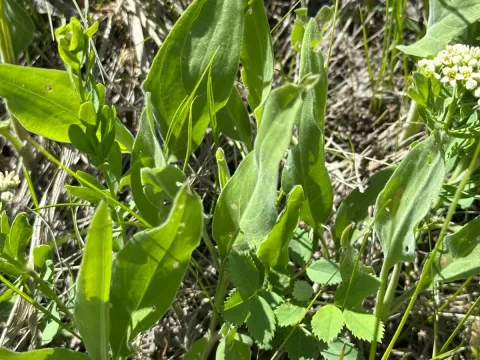
Stiff goldenrod
Solidago rigida
Seeds of Solidago rigida are typically sown in late autumn for winter stratification or in early spring. Starting indoors in March is recommended to ensure robust seedlings ready for transplanting by the end of May.
What the section contains
Stiff goldenrod
When sowing, seeds should be surface-sown as they require light for germination. Covering them with a very thin layer of fine soil or sand is sufficient to keep them in place without depriving them of necessary light.
Maintaining consistent soil moisture is critical during the initial germination phase. If the soil surface dries out, the delicate embryos may perish, leading to significant yield losses before the season begins.
For direct sowing in the field, space the rows at least 45 cm apart to allow for proper airflow as the plants mature. Thinning seedlings is necessary to avoid overcrowding, which can reduce overall plant vigor.
Vegetative propagation via root division is a highly efficient method for maintaining consistent plant quality. This task should be performed while the plant is dormant in early spring or late autumn.
Solidago rigida, a member of the Asteraceae family, is a hardy perennial native to North American prairies. It is highly valued for its ability to thrive in diverse and challenging environmental conditions.
The plant performs best in full sun, where it produces sturdy, upright stems. While it can tolerate partial shade, too little light will cause the plant to become "leggy" and may significantly reduce its flowering capacity.
This species prefers well-draining, loamy soils. It is remarkably drought-tolerant once established, though it does not tolerate waterlogged conditions, which can lead to crown and root rot in heavy clay soils.
It is fully winter-hardy and requires no special protection, even in severe cold. Its adaptation to harsh prairie conditions makes it a low-maintenance choice for large-scale agricultural or restoration projects.
Nutrient requirements are low; excessive fertilization should be avoided. Over-feeding tends to produce weak, succulent foliage that is prone to flopping over in strong winds or heavy rain.
Solidago rigida serves multiple purposes, primarily in the apiculture and ornamental industries. Its yield is measured in the abundance of late-season blooms, which are highly attractive to bees and beneficial insects.
As a late-summer to autumn nectar source, it provides a vital food supply for pollinators when few other nectar sources are available. This makes it an essential component for sustainable beekeeping operations.
In the cut flower market, the rigid, flat-topped clusters of flowers are prized for their longevity. Harvested at the right stage, they can maintain their aesthetic appeal in arrangements for over two weeks.
Its deep root system makes the stiff goldenrod an excellent candidate for soil stabilization and erosion control on slopes. Yield in this context is defined by the density of ground cover achieved per hectare.
To ensure consistent annual yield of high-quality inflorescences, divide and rejuvenate the clumps every 4 to 5 years. This practice prevents the center of the plant from dying out and keeps the floral display vigorous.
The most common disease affecting Solidago rigida is powdery mildew, which thrives during periods of high humidity and poor air circulation. Proper spacing is the primary cultural defense against this pathogen.
Rust fungi may also appear during unusually wet seasons, manifesting as orange spots on the underside of leaves. Affected foliage should be promptly removed and discarded far from the planting site.
Pests like aphids and spider mites can occasionally settle on tender new growth. In most cases, these are managed by natural predators, but localized infestations can be treated with mild insecticidal soaps.
To minimize disease pressure, always remove all plant debris from the field after the growing season. This reduces the number of fungal spores that can overwinter and cause problems the following year.
Given the stiff goldenrod's natural resistance, intensive chemical control programs are rarely required. Integrated Pest Management (IPM) practices, including proper crop rotation and site selection, are usually sufficient.