
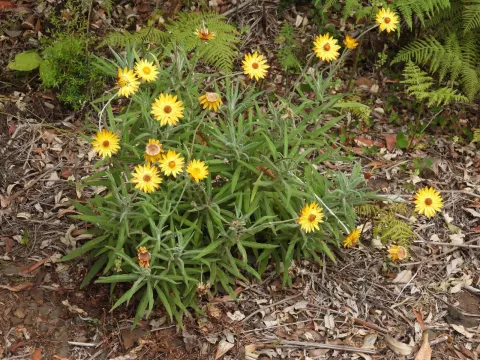
Strawflower
Xerochrysum Tzvelev
Sowing strawflower seeds indoors should take place in late March or early April to ensure strong seedlings before transplanting. In warmer climates, direct sowing into the open field is possible once the soil has warmed up sufficiently in late spring.
What the section contains

Strawflower
For optimal germination, seeds should be sown on the surface of a moist medium, as they require light to sprout. Covering the trays with plastic film helps maintain the necessary humidity levels until the seedlings emerge.
Pricking out the seedlings occurs once the first set of true leaves develops. Placing them into individual pots encourages a robust root system and helps prevent the plants from becoming leggy before they are moved to their permanent location.
Hardening off the plants is a critical step in their development, ensuring they can withstand outdoor conditions. This process involves gradually exposing the seedlings to outside temperatures over a period of ten days.
Transplanting into the garden is done in May when the danger of frost has passed. A spacing of 30 centimeters between plants is recommended to promote healthy growth and adequate airflow, which is essential for disease prevention.
Strawflower, a member of the Asteraceae family, thrives in full sun conditions. It requires open, sunny locations to produce vibrant colors and high-quality blooms, as even partial shade can negatively affect the plant's development.
Well-draining, light, and sandy-loam soils are ideal for this crop. Improving soil structure with organic matter is beneficial, provided that water drainage is not compromised, as the plant is susceptible to root issues in waterlogged ground.
While strawflowers are moderately drought-tolerant, consistent moisture during the budding stage is crucial for high-quality yields. Irrigation should be managed carefully to avoid excessive moisture around the base of the stem.
Fertilization with a balanced NPK mix helps in promoting long-lasting, sturdy stems. However, excessive nitrogen should be avoided to prevent over-growth of foliage at the expense of flower production, which is the primary value of the crop.
Regular weeding and soil aeration between rows are necessary to maintain healthy growth. Protecting the plants from strong, prevailing winds is also recommended to prevent damage to the taller flowering stems during the season.
Powdery mildew is a significant threat, particularly in humid conditions or where there is poor air circulation between the plants. Fungicidal treatments and thinning out dense patches are effective management strategies for this disease.
Root rot often occurs in soils with poor drainage or during prolonged periods of excessive rain. Preventing water saturation in the root zone is the most effective way to manage and avoid this common agricultural problem.
Aphids are the most common pests that target the young buds and succulent tips of the stems. Early identification allows for targeted control using natural or synthetic insecticides to prevent widespread damage to the harvest.
Spider mites can become problematic during hot and dry summer spells. Maintaining good plant health and providing adequate moisture levels are essential for minimizing the risk of mite infestations in the strawflower patch.
Integrated pest management, including crop rotation, helps to minimize the pressure from soil-borne pathogens. Avoiding the same planting location for consecutive years is a standard practice for maintaining the longevity of the site.
Harvesting for the dried flower market should be performed when the flower is only semi-open. Picking at this stage ensures that the strawflower retains its characteristic color and rigid, paper-like texture as it fully dries.
Once harvested, the stems should be gathered into small bunches and hung upside down in a dark, dry, and well-ventilated area. Darkness is essential to preserve the vibrant, natural colors of the petals and prevent fading.
The drying process typically takes several weeks until the stems are brittle and the flowers feel completely dry to the touch. Properly dried strawflowers can maintain their aesthetic appeal for a very long period if handled correctly.
Storing the dried material in a clean, dust-free environment is necessary to keep it ready for floral arrangements. Exposure to high humidity during storage can cause flowers to lose their shape or develop mold, ruining the product.
Continuous harvesting of mature buds throughout the season stimulates the plant to produce new blooms. This practice maximizes the total yield per plant, ensuring a productive season from late spring until the first frosts.