
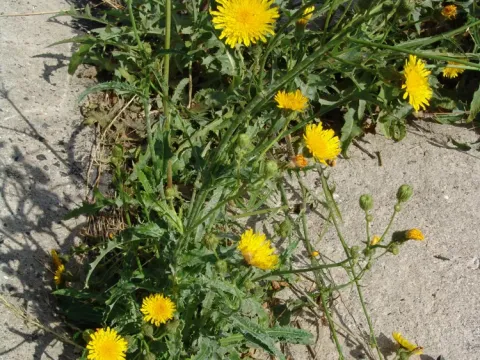
Blunt-lobed sow thistle
Sonchus obtusilobus
Blunt-lobed sow thistle (Sonchus obtusilobus) belongs to the Asteraceae family. It is a perennial or annual herbaceous plant known for its structural robustness and its ability to occupy various types of environments with diverse soil compositions.
What the section contains
Blunt-lobed sow thistle
Botanically, it is characterized by its distinctively blunt-lobed leaves and a milky sap. The plant reaches a moderate height, typically producing yellow inflorescences typical of the genus Sonchus, which are highly attractive to pollinators and insects.
Regarding climate and soil, the plant prefers well-drained, moderately fertile soil conditions. It exhibits significant tolerance to different pH levels, although neutral to slightly alkaline soils are optimal for rapid biomass accumulation and development of the root system.
It thrives in full sun exposure. While the plant can withstand periods of mild drought, consistent moisture during the active vegetative growth phase significantly enhances the yield and the overall health of the plant population.
Agricultural management should focus on maintaining a clear space between plants to ensure proper aeration. Thinning out overcrowded areas is recommended to prevent competition and allow each plant to reach its full physiological potential during the season.
The main disease risks include downy mildew and various forms of leaf spots which are triggered by high humidity levels. Ensuring proper airflow within the crop stand is the primary preventative measure against such fungal infections.
Common pests include aphids that feed on the soft tissues of the stems and the developing buds. These pests can significantly stunt the growth of the crop if not managed timely through integrated pest control practices.