
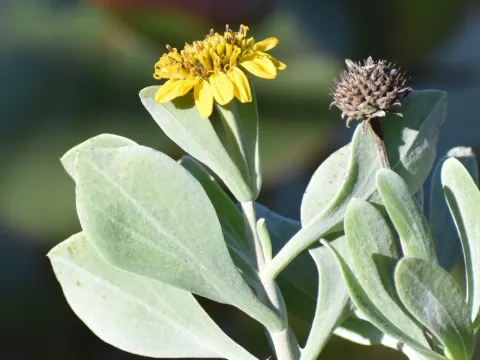
Borrichia
Borrichia
Borrichia (Borrichia) is a genus of perennial succulent herbaceous plants in the Asteraceae family. In the wild, these plants are primarily found in coastal zones, salt marshes, and dunes along the Atlantic coast of North and tropical America.
What the section contains

Borrichia
A key biological feature of Borrichia is its extreme tolerance to soil salinity and sea spray. This quality makes it a highly valuable species for the phytoremediation of saline lands and the prevention of coastal erosion.
The plant prefers well-drained, sandy or loamy soils with high salt content, environments that are typically detrimental to most conventional agricultural crops. It is capable of withstanding prolonged periods of drought and intense direct sunlight.
Optimal climatic conditions for its development include warm subtropical zones where there is no significant risk of deep ground freezing. The plant forms dense clumps that effectively stabilize the soil and prevent washouts caused by tides.
In agricultural and landscaping contexts, Borrichia is considered a promising species for stabilizing coastal areas and as a potential source of biomass adapted to extremely challenging ecological niches.
The primary threats to Borrichia populations include specific leaf-eating pests that have adapted to life on salt-tolerant vegetation.
Poor drainage and water stagnation in the root zone can lead to the development of root rot, particularly in heavy clay soils that are unsuitable for this crop.
Intense competition from aggressive invasive plant species can hinder the growth of young individuals during their sensitive establishment period.
Pests, such as larvae of certain moth species, can damage reproductive organs and foliage, negatively impacting both the plant's aesthetic value and its potential for seed propagation.
Despite its high natural resilience, over-application of fertilizers during cultivation can potentially compromise the plant's inherent resistance to pathogenic fungi.