
Border goldenrod
Solidago confinis
Description
Sowing dates
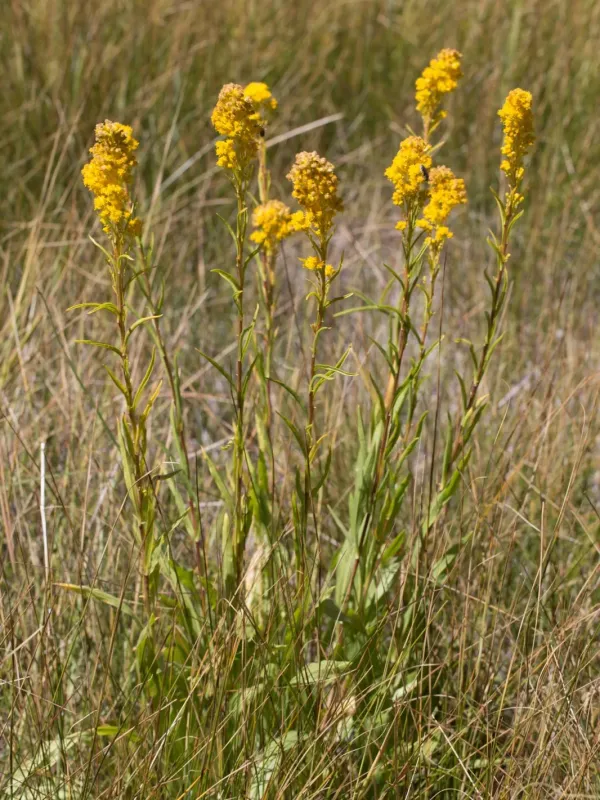
Border goldenrod (Solidago confinis) belongs to the Asteraceae family. Sowing in open ground is best performed in early spring or late autumn, providing seeds with necessary cold stratification for better germination.
For greenhouse cultivation, seeds should be sown in late March. A stratification period of at least one month in a cold place is required to break seed dormancy and ensure a uniform germination rate.
Seeds should be covered with a very thin layer of soil, about 0.5 cm deep. They require stable temperatures around +20 degrees Celsius to develop into healthy seedlings.
Once the seedlings develop 3-4 true leaves, they can be transplanted to their permanent location. Proper spacing of 40-50 cm between plants is essential to allow for full bush development.
Effective establishment of the crop relies on consistent moisture during the first few weeks after transplantation, helping the root system take hold in the field.
Growing requirements
This crop thrives in sunny locations but can tolerate partial shade. Sunlight exposure directly impacts the density of blooms and the overall plant vigor throughout the season.
Soil requirements are moderate, with a preference for fertile, well-drained loamy soils. Avoiding areas with stagnant water is critical to prevent root rot and other moisture-related ailments.
Solidago confinis is highly winter-hardy and easily survives cold climates. Mulching the base of the plant in late autumn helps protect the root zone during harsh winter periods.
While the plant is somewhat drought-tolerant once established, providing regular water during the flowering stage significantly improves the harvest quality and bloom duration.
A balanced fertilization program, involving spring nitrogen application and mid-summer phosphorous input, will support consistent growth and high yields of floral material.
Yield
The yield potential of Border goldenrod increases as the plants mature. A well-maintained plantation will reach its peak productivity during the third year after initial planting.
Commercial production yields can be substantial, with proper plant density management per hectare. The crop is valued for its rapid biomass growth and long flowering window.
By removing faded flower stalks, growers can often trigger secondary blooming, which extends the harvest season and maximizes the total annual yield of the crop.
Dividing the rhizomes every 4 to 5 years is a recommended agricultural practice to keep the plants healthy and prevent overcrowding, which can otherwise diminish floral yields.
Post-harvest processing involves careful handling to preserve the integrity of the flowers, as the market value depends heavily on the visual quality of the dried product.
Main diseases and pests
The most common disease impacting this crop is powdery mildew, particularly in conditions with poor air circulation or high humidity. Managing plant spacing is the best preventative strategy.
Aphids and various plant bugs are the primary pests that damage the succulent tissues of the growing tips. Scouting the fields early allows for targeted intervention with safe control methods.
Weed management is essential during the early stages of growth to prevent resource competition. Keeping the rows clean helps maintain high airflow, reducing the risk of fungal infections.
If fungal signs are detected, systemic fungicides may be used according to regulatory guidelines. Early intervention is key to stopping the spread of infection throughout the field.
Maintaining a balanced ecosystem on the farm by encouraging beneficial insects can naturally suppress pest populations, reducing the need for intensive chemical applications.
Harvesting
Harvesting for medicinal or floral use should occur when the majority of florets are fully open. This timing ensures the highest concentration of phytochemicals in the harvested biomass.
The upper portions of the stems are harvested using sharp tools, leaving sufficient foliage to allow the plant to store energy for winter dormancy and subsequent regrowth.
Drying must take place in a shaded, well-ventilated area. Direct sunlight should be avoided to prevent the oxidation of essential oils and the fading of the yellow flower color.
After the material is thoroughly dried, it should be sorted to remove any damaged or coarse stems before being packed into breathable containers for storage or sale.
When kept in dry, cool conditions away from direct light, the harvested material maintains its quality and marketability for up to two years after the initial harvest date.