
Cutler's goldenrod
Solidago cutleri Fern.
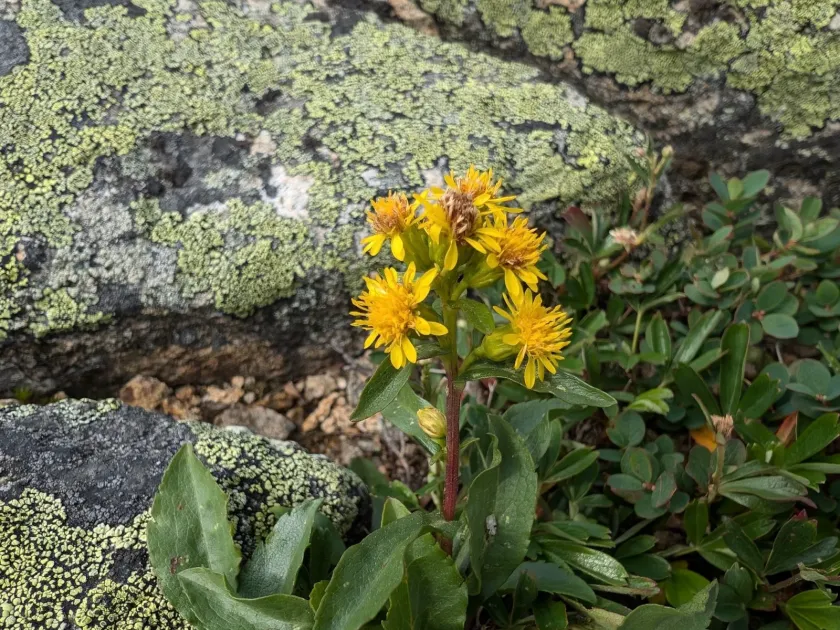
Description
Growing requirements
Cutler's goldenrod (Solidago cutleri) is a perennial herbaceous plant belonging to the Asteraceae family. Originally from the alpine regions of the northeastern United States, this species is highly adapted to rocky, well-drained habitats and cool temperate climates.
Botanically, this is a dwarf species, typically growing to a height of 10–25 cm. Its leaves are lanceolate and arranged in a basal rosette, providing a dense, lush appearance that stays low to the ground, making it structurally distinct from taller goldenrod varieties.
For successful cultivation, the plant requires acidic to neutral soil that provides excellent drainage. Sandy or rocky loam mixtures are ideal. It performs best in full sun, as shade will cause the plant to become "leggy" and reduce the intensity of its vibrant yellow flower display.
The climate requirements for Solidago cutleri are relatively undemanding due to its alpine heritage. It is winter-hardy and can withstand significant frost. However, in garden settings, the soil must not remain waterlogged during the spring thaw to prevent root rot.
This goldenrod is primarily used for ornamental purposes in rock gardens and alpine borders. Its ability to thrive in poor, rocky soils makes it an excellent candidate for specialized landscaping projects where other perennials might struggle to establish.
Main diseases and pests
The primary diseases affecting Cutler's goldenrod are fungal in nature, usually triggered by poor air circulation or excessive moisture. Powdery mildew can occur on the foliage if the plants are crowded or located in an area with stagnant, humid air.
Rust diseases may occasionally appear on the leaves during wet, cool seasons. Preventive measures include ensuring proper spacing between plants and keeping the foliage as dry as possible during irrigation, ideally by watering directly at the base.
Pests such as aphids can colonize the flower spikes in late summer. While they rarely kill the plant, they can distort growth. Regular monitoring allows for early intervention with insecticidal soaps or horticultural oils if necessary.
Slugs and snails may feed on the tender foliage, particularly in early spring. Protecting young plants with coarse mulch or gravel acts as a mechanical deterrent, making it difficult for these mollusks to move across the soil surface toward the plant crown.
Maintaining plant health also involves pruning spent flower heads to prevent self-seeding (if not desired) and to focus the plant's energy on root development for the next season, ensuring longevity and vitality of the goldenrod cluster.