
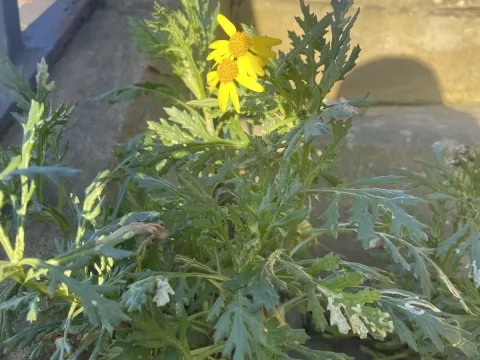
Oxford ragwort
Senecio squalidus
Oxford ragwort is not an agricultural crop; rather, it is a ruderal plant often considered a weed in managed landscapes. It reproduces prolifically through seed dispersal, which is facilitated by the wind.
What the section contains
Oxford ragwort
The seeds are equipped with a pappus, allowing them to travel long distances from the parent plant. This efficient dispersal mechanism enables the species to colonize disturbed soil and agricultural fallow land very rapidly.
Seed germination is highly opportunistic, occurring throughout the growing season whenever moisture and temperature levels are adequate. The seeds can remain viable in the soil for significant periods.
In a farming context, sowing is never performed; instead, the focus is on preventing its establishment. Because of the high volume of seed production, single plants can quickly lead to an infestation in adjacent areas.
Effective management requires eradicating the plants before they reach the flowering stage. Once seeds have matured, the spread becomes nearly impossible to contain manually.
Belonging to the Asteraceae family, Oxford ragwort thrives in well-drained, nutrient-poor, and often rocky soils. It is particularly known for colonizing man-made structures like stone walls and railways.
It has an absolute requirement for high light intensity. Oxford ragwort cannot compete effectively in shaded environments, which makes cultural control through crop canopy closure a viable strategy.
Climate tolerance is a hallmark of this species, as it is adapted to cool temperate conditions and can withstand moderate drought. It remains active as long as basic moisture requirements are met.
The plant demonstrates significant environmental plasticity, being a hybrid of different species. This genetic flexibility allows it to adapt to diverse soil pH levels and microclimates.
Soil disturbance acts as a catalyst for growth. Tillage operations that do not fully destroy the plant can sometimes lead to further proliferation if the root system is fragmented.
The primary agricultural threat posed by Oxford ragwort is its toxicity to livestock. It contains pyrrolizidine alkaloids that cause liver damage in cattle and horses when consumed as green forage or in contaminated hay.
Beyond toxicity, it acts as a strong competitor for water and minerals. In high densities, it can reduce the biomass of desirable forage crops or suppress the growth of young vegetable crops.
The plant serves as a host for various fungal diseases, such as rusts and powdery mildew, which can spread to neighboring commercial crops. This creates a secondary risk to crop quality and yield.
Common pests like aphids often utilize the plant as a refuge. From there, they can move onto vulnerable horticultural crops, increasing the risk of virus transmission.
- Regular mowing before seed set.
- Targeted herbicide application in non-crop areas.
- Promoting competitive crop growth to shade out weed seedlings.