
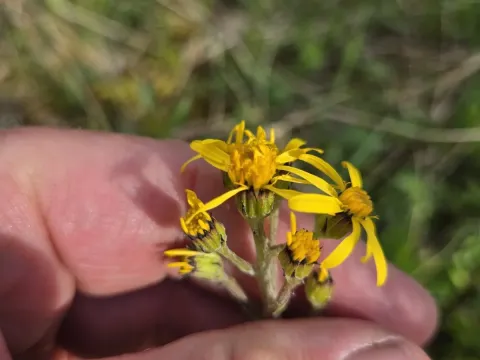
Senecio lugens
Senecio lugens
Senecio lugens is a perennial herbaceous plant belonging to the Asteraceae family. It is native to various regions of North America, where it has evolved to thrive in cool, temperate, and subarctic climates, demonstrating remarkable resilience to harsh environmental conditions.
What the section contains
Senecio lugens
Botanically, this species is characterized by an erect stem that can reach heights of 30 to 60 cm. The leaves are typically lanceolate or ovate and are often covered with fine hairs, which help the plant retain moisture and protect against wind-driven desiccation in exposed environments.
The species requires well-drained soil to thrive, as it is susceptible to root decay if water accumulates around the base. It is generally found in meadows and open tundra, where it competes with other hardy flora for space and sunlight during the short growing season.
Regarding climate, Senecio lugens is highly tolerant of frost and significant temperature fluctuations. It requires a stable moisture supply throughout the early developmental stages but becomes more drought-tolerant once the root system is fully established.
Its agricultural value is generally considered low because members of the Senecio genus often contain pyrrolizidine alkaloids. These compounds can be toxic to livestock, making the plant undesirable in areas intended for hay production or intense animal grazing.
The plant is vulnerable to common fungal infections, including powdery mildew and various leaf spot pathogens, particularly during periods of high humidity and poor air circulation in the micro-environment.
Insect pests such as aphids and spider mites can cause significant damage by feeding on the leaves. Additionally, certain types of weevils have been observed to impact the overall health of the plant by damaging its root or stem tissues.
The management of threats involves maintaining healthy soil aeration and managing plant density. Avoidance of chemical over-treatment is crucial, as the plant serves as a food source for various native pollinators and beneficial insects.
Integrated pest management strategies for this species focus on environmental sanitation, such as removing debris and infected plant tissues to prevent the buildup of fungal spores during the dormant winter period.
Monitoring the plant's health periodically allows for early detection of infestations, which is essential to prevent rapid spread across localized wild patches or managed plant displays.