
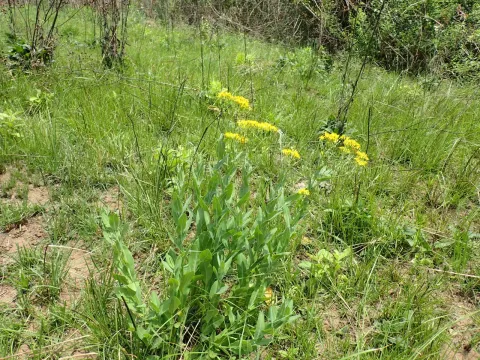
Senecio latifolius
Senecio latifolius
Senecio latifolius is a perennial herbaceous plant belonging to the Asteraceae family, native to regions of Southern Africa where it typically inhabits open grasslands.
What the section contains
Senecio latifolius
The plant exhibits significant botanical versatility, thriving in various soil types including sandy soils and clay loams, provided there is adequate drainage for its root system.
Climatically, the species prefers temperate to warm environments with distinct seasons, allowing it to complete its vegetative cycle before entering dormancy.
Its physiological strategy involves deep root accumulation, which allows the plant to persist in harsh conditions and regenerate rapidly even after top-growth destruction.
From an agricultural standpoint, it acts as a competitor for water and nutrients, and due to its rapid spread via seeds, it is often treated as a major invasive threat.
The primary concern regarding Senecio latifolius is its high toxicity, as it contains pyrrolizidine alkaloids that cause liver damage in livestock.
Animals grazing in infested areas are at high risk of poisoning, especially since the toxic effects are cumulative and symptoms often appear long after initial ingestion.
Specific pests like certain moth larvae may feed on the plant, but they do not provide sufficient biological control to mitigate its ecological impact.
Common fungal diseases, such as powdery mildew or rusts, can affect foliage quality but rarely manage to eradicate established populations of the plant.
Effective management includes preventative measures such as pasture rotation, physical removal of the plant before seed set, and targeted chemical applications.