
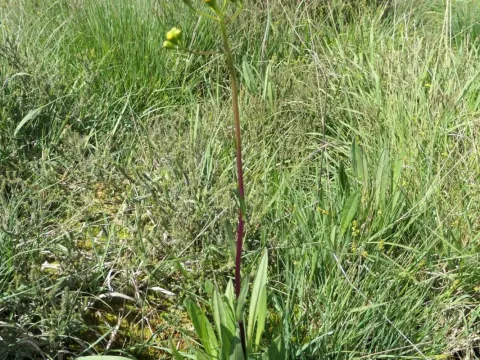
Senecio legionensis
Senecio legionensis
Senecio legionensis is a distinct perennial species belonging to the Asteraceae family. Originating from the mountainous regions of Spain, it has evolved to thrive in specific limestone-rich environments, making it a subject of specialized agricultural and botanical interest.
What the section contains
Senecio legionensis
The botanical characteristics of the species include a compact growth habit, dense foliage, and efficient nutrient uptake mechanisms suited for high-altitude soils. These adaptations reflect its evolutionary history in harsh, rocky terrains where soil fertility is relatively low.
Environmental requirements for cultivation involve a high need for solar radiation and a strict tolerance for drought. The soil must be alkaline and perfectly drained to prevent physiological disorders in the root zone, as the species is highly susceptible to hypoxia.
Agrotechnical management requires precise irrigation scheduling. In a controlled field environment, it is advisable to mimic the natural scree slope conditions to ensure the plant expresses its full genetic potential while avoiding negative water balance issues.
The economic value of this crop is currently focused on its chemical diversity, particularly regarding secondary metabolites. Ongoing research is evaluating the potential of these compounds for industrial and pharmaceutical applications.
The primary threats to Senecio legionensis production are soil-borne pathogens, specifically fungal diseases such as Phytophthora. These are most common when environmental conditions lack proper aeration or moisture control.
Insect pests, including various aphids and larvae, pose a significant risk to the vegetative stages of the plant. Regular field inspections are necessary to detect early signs of infestation and prevent widespread damage to the crops.
In addition to pests, weed interference is a critical concern, as the species is not highly competitive against faster-growing vegetation. Effective weed management must be carried out in the early stages of plant development to secure growth.
Chemical stress can also be an issue, as the plant is sensitive to synthetic fertilizer burn. Fertilization programs must be highly calibrated to match the plant's slow growth rhythm and low nutrient requirements.
To mitigate these threats, integrated pest management strategies are recommended. Emphasizing cultural practices, such as maintaining optimal plant density and soil structure, is the most effective approach to ensuring plant health and sustainability.