
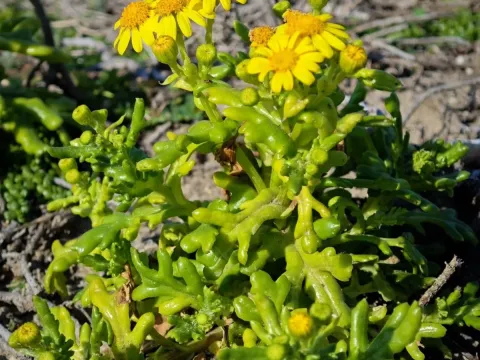
Senecio leucanthemifolius
Senecio leucanthemifolius
Senecio leucanthemifolius is an annual herbaceous species belonging to the Asteraceae family. It is widely recognized for its ecological adaptability, often found in Mediterranean habitats and disturbed coastal environments.
What the section contains
Senecio leucanthemifolius
The plant originates from the Mediterranean basin. Its natural habitat includes sandy dunes and rocky substrates where competition for nutrients is relatively low compared to more fertile soils.
Botanically, it is characterized by its distinct pinnatifid leaves and vibrant yellow flower heads arranged in corymbs. The species exhibits high morphological variability depending on soil salinity and moisture levels.
Climate requirements include mild winters and a pronounced dry season, allowing the plant to complete its life cycle before summer heat intensities peak. It thrives in well-drained, porous soil types.
From an agronomic perspective, this species is not typically cultivated for harvest. Instead, it is monitored as an opportunistic colonizer in agricultural landscapes, often appearing in fallow fields.
The species can be affected by various fungal diseases, most notably powdery mildew and rusts, which thrive in humid conditions and can inhibit the growth of the plant population.
Pests such as aphids and leaf miners often utilize the foliage as a host. These insects weaken the plant by feeding on its tissues, which may indirectly influence the overall weed pressure in a field.
The primary concern for farmers is the dispersal of wind-borne seeds, which allows Senecio leucanthemifolius to invade neighboring plots rapidly after a single growing season.
Effective management strategies include the implementation of cover crops and timely tillage to prevent flowering and subsequent seed set, which is critical for long-term control.
Chemical control measures are generally effective but require precise timing to avoid damage to surrounding crops. Integrated pest management (IPM) remains the most sustainable approach.