
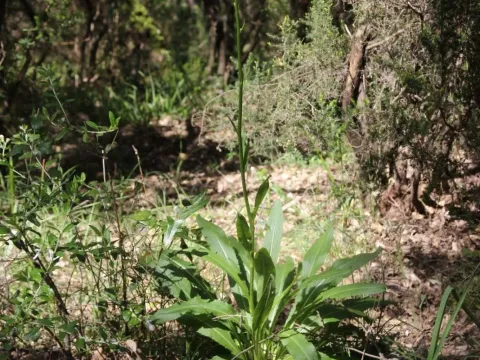
Senecio lopezii
Senecio lopezii
Senecio lopezii is a perennial herbaceous plant or subshrub belonging to the Asteraceae family. This species is a succulent that has evolved specific physiological adaptations to thrive in harsh environments with limited water availability.
What the section contains
Senecio lopezii
Its natural habitat is primarily located in the Iberian Peninsula, where it is found in specific rocky, mountainous terrains. This distribution highlights its evolution as a plant adapted to extreme exposure and poor, rocky substrates.
For successful cultivation, the plant requires well-drained, nutrient-poor soil that mimics its native environment. A high percentage of inorganic amendments such as perlite or coarse sand is essential to prevent water stagnation in the root zone.
Optimal growth conditions necessitate high solar radiation levels to maintain the compact growth habit typical of this species. Proper airflow is crucial in controlled environments to prevent humidity-related issues that the plant is susceptible to.
The primary use of Senecio lopezii is in ornamental horticulture, specifically for dry gardens and xeriscaping. Its unique morphological structure makes it a valued specimen for collectors of succulents and landscape designers.
The most significant threat to Senecio lopezii is fungal infection, particularly root rot, which is almost exclusively caused by overwatering or poor soil drainage. Once rot begins, it can quickly compromise the plant's vascular system.
Pests commonly include mealybugs, which tend to shelter in the dense leaf axils and stems, making them difficult to detect. Spider mites can also be a challenge, particularly in indoor environments with very low humidity levels.
Preventative care is the most effective strategy, focusing on allowing the substrate to dry out completely between waterings. Maintaining a clean growing area and inspecting new plants before introduction are essential agricultural practices.
Abiotic stress from extreme temperature fluctuations or frost can weaken the plant, making it more susceptible to secondary infections. Protective measures during adverse weather are often required in non-native climates.
Integrated pest management, including regular monitoring and manual removal of pests, is preferred over aggressive chemical applications that might affect the plant's delicate surface tissue.