
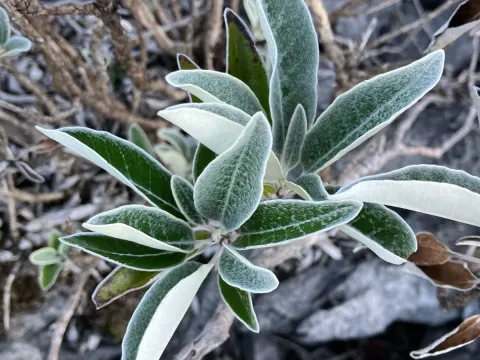
Senecio laxifolius
Senecio laxifolius
Senecio laxifolius is an evergreen subshrub belonging to the Asteraceae family. Originating from New Zealand, it is highly valued for its striking silver-grey foliage and yellow flower heads that appear in summer.
What the section contains
Senecio laxifolius
This species thrives in full sun exposure. Sunlight is essential for maintaining the dense, compact habit of the plant and for preserving the intensity of the silver hairs on its leaves.
It demands excellent drainage to survive. The plant is perfectly adapted to rocky, sandy, or well-drained loamy soils but will struggle significantly in heavy clay or waterlogged ground.
Climate requirements include mild winters, as the plant is hardy in temperate regions (USDA zones 8-9). In colder climates, it is often kept in pots that can be moved indoors during frost periods.
Cultivation involves minimal but consistent maintenance. Pruning the plant after flowering helps to prevent it from becoming woody and leggy, ensuring a fresh flush of foliage the following season.
Root rot is the primary threat to the health of Senecio laxifolius. This fungal issue is almost always a result of poor soil drainage or excessive irrigation, particularly during dormant winter months.
Powdery mildew can affect the foliage during periods of stagnant, humid air. Good spacing and garden hygiene, such as removing fallen leaves from under the canopy, can mitigate this risk effectively.
Aphids are the most common pests found on the plant. They tend to congregate on the softest, newest growth tips, causing leaf curling if the infestation is left unchecked for too long.
Red spider mites can be problematic in hot, dry conditions. Regular misting or the use of appropriate acaricides can help manage populations before they cause significant aesthetic damage to the leaves.
In terms of long-term protection, ensuring that the plant is not overcrowded by other taller perennials is crucial for allowing adequate airflow around the base of the shrub.