
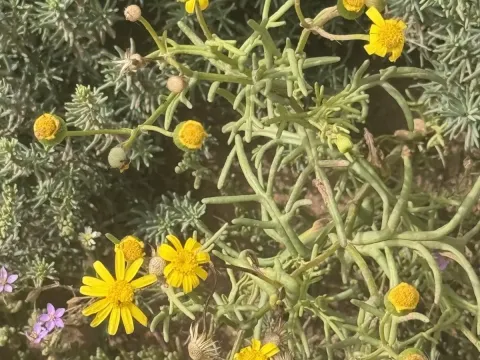
Glaucous ragwort
Senecio glaucus
Glaucous ragwort (Senecio glaucus) is an herbaceous annual plant belonging to the Asteraceae family. It is native to arid and semi-arid regions of North Africa and Western Asia, where it has evolved to thrive in harsh desert environments.
What the section contains
Glaucous ragwort
The plant is distinguished by its glaucous, bluish-green foliage covered in a waxy bloom, which serves as a natural defense against moisture loss. Its leaves are typically pinnately lobed, while the bright yellow flower heads emerge during the peak growing season.
It prefers sandy or stony soils and requires high levels of solar radiation to complete its life cycle effectively. This species is highly adapted to areas where water scarcity prevents the growth of more demanding plant varieties.
Climatic requirements focus on hot, arid conditions with significant temperature fluctuations. Waterlogging is the primary environmental factor that negatively impacts this species, leading to root asphyxiation and eventual plant death.
In terms of agricultural use, this plant is considered for soil stabilization projects in arid zones. Its ability to tolerate low nutrient availability makes it a candidate for rehabilitating disturbed land in desert environments.
Root rot is the most common disease affecting the plant, usually triggered by poor soil drainage or high humidity. These conditions provide an optimal environment for soil-borne fungi that attack the root system during the development stage.
Pests such as aphids and stem nematodes can cause significant damage to the floral parts and roots. These infestations often occur when the plants are grown in crowded conditions without adequate spacing.
Like many species in the Senecio genus, it contains pyrrolizidine alkaloids, which are toxic to livestock. Caution must be exercised to ensure that areas containing this plant are managed safely if grazing animals are present.
Management of these threats relies heavily on preventative agronomic practices. Ensuring excellent drainage and avoiding high-density planting are critical steps in maintaining a healthy crop.
Integrated pest management remains the most sustainable approach for this crop, focusing on biological controls rather than chemical interventions, which the plant may be sensitive to during its early development.