
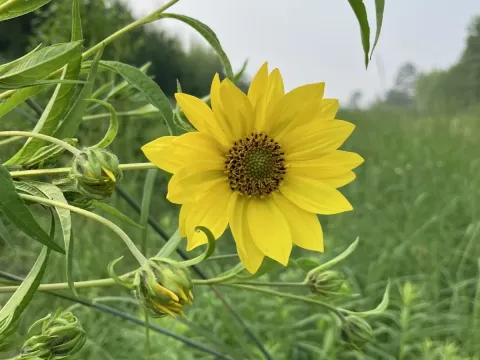
Giant sunflower
Helianthus giganteus
Giant sunflower (Helianthus giganteus) is a robust perennial species belonging to the Asteraceae family. Unlike common annual sunflowers, this plant features a rhizomatous root system, which allows it to return year after year, forming large, dense clumps in suitable environments.
What the section contains
Giant sunflower
Originating from North America, this species is naturally adapted to moist, open meadows, marshes, and riverbanks. Its preference for moisture-retentive soils makes it a unique addition to landscapes compared to other sun-loving members of the genus.
The crop thrives in full sun but can tolerate partial shade, provided it receives sufficient moisture. It is best suited for fertile, nutrient-rich soils that do not dry out completely during the heat of the summer months, ensuring rapid stem elongation.
Regarding climate, Helianthus giganteus is remarkably hardy. It is adapted to temperate zones where it experiences dormant winters. The above-ground parts perish after the first hard frost, while the underground rhizomes survive to sprout vigorously the following spring.
In terms of agricultural and landscape usage, the giant sunflower is primarily grown for its ornamental value and its ability to act as a significant source of nectar for pollinators during the late summer and autumn seasons.
The primary pathological threat to giant sunflowers is powdery mildew, a fungal disease that creates white, dusty-looking spores on the leaves, usually when humidity is high and airflow is restricted.
Pests, particularly aphids, can be a concern as they cluster on the succulent tips of the stems and developing flower buds, draining sap and potentially acting as vectors for viral diseases.
Occasional infestations by leaf-miners or caterpillars can affect the visual quality of the foliage, though the plant's vigorous growth rate usually allows it to recover quickly from minor defoliation.
To manage threats, it is recommended to space plants correctly, ensuring at least one meter between clumps to promote airflow and prevent the buildup of fungal pathogens in the lower canopy.
Sanitary maintenance in the autumn, which involves cutting the stalks to the ground and removing the debris, is an effective strategy to reduce the overwintering population of harmful insects and disease spores.