
Glacier wormwood
Artemisia glacialis
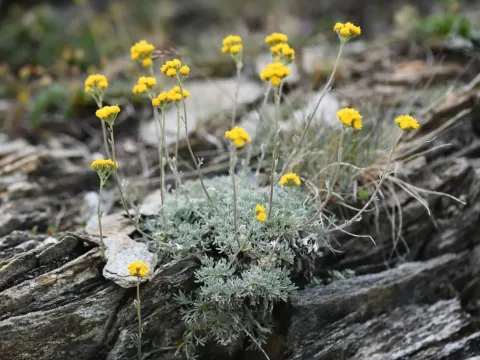
Glacier wormwood (Artemisia glacialis) is a member of the Asteraceae family. This perennial herb is native to the high-altitude regions of the Alps, where it thrives in rocky crevices and poor soils, demonstrating remarkable resilience to cold and high-velocity winds.
What the section contains
Glacier wormwood
Cultivation requirements involve mimicking its natural mountain habitat. The crop demands exceptionally well-drained soil, as it is highly susceptible to root rot in waterlogged conditions. It prefers a sunny position and thrives in soils that are low in nitrogen, which encourages the development of its signature secondary metabolites.
The botanical structure of the plant features silver-hued, pubescent leaves that minimize water loss through evaporation. Its flowers are typical of the Artemisia genus, appearing as small, dense capitula. The plant grows in a low-mounded habit, making it ideal for rocky landscape features or specialized herb gardens.
Economically, this species is highly regarded for its aromatic profile. It is a key ingredient in the production of traditional Alpine liqueurs and spirits, such as Genepì. Additionally, it has a history of use in phytotherapy due to its digestive and antiseptic properties.
Threats to the crop include fungal pathogens triggered by poor air circulation or over-irrigation. While relatively resistant to major pests, the plant may occasionally suffer from infestations of aphids or spider mites during periods of drought stress. Proper management of drainage and ventilation is the primary strategy for ensuring plant health.