
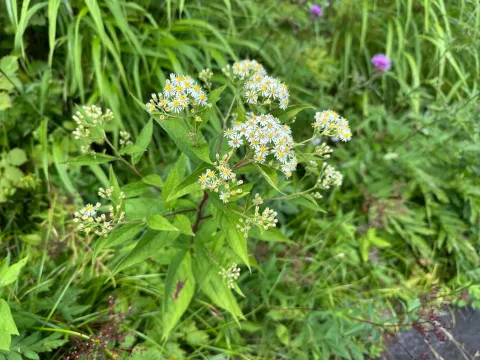
Glehn's aster
Aster glehnii
Glehn's aster (Aster glehnii) is a perennial herbaceous plant belonging to the Asteraceae family. It is native to the regions of the Russian Far East, Japan, and the Korean Peninsula, typically growing in moist woodland habitats, stream banks, and alpine meadows where the microclimate provides consistent humidity.
What the section contains
Glehn's aster
Botanically, the plant is characterized by sturdy, upright stems that can reach heights of 100 to 120 centimeters. The leaves are lanceolate and slightly scabrous, forming a lush foliage mound that remains attractive throughout the growing season before the plant produces its characteristic daisy-like flowers.
This species thrives in partially shaded locations with rich, humus-filled soils. It prefers moisture-retentive substrate and does not tolerate prolonged drought. Incorporating organic matter such as compost or peat into the soil during planting helps maintain the necessary moisture levels for optimal growth.
Agrotechnical management includes moderate fertilization in the spring to encourage robust stem development. As a hardy perennial, Glehn's aster is well-adapted to cold climates and does not require special winter protection, making it a reliable choice for gardeners in temperate zones.
In terms of usage, the plant is primarily cultivated for ornamental purposes in landscape architecture. It is an excellent candidate for back-of-border planting, woodland gardens, or naturalized wildflower meadows, offering late-season floral interest when other garden perennials have faded.
The primary threats to this plant involve fungal diseases like powdery mildew, particularly in areas with poor air circulation or high humidity levels. Maintaining adequate spacing between individual plants and avoiding overhead watering can significantly reduce the risk of infection.
Insect pests such as aphids and spider mites can occasionally affect the foliage, especially during hot and dry spells. Integrated pest management, including the use of horticultural oils or natural predators, is recommended to keep pest populations at bay without damaging the beneficial insect community.