
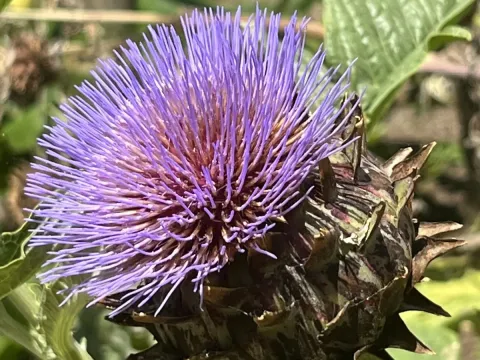
Globe artichoke
Cynara scolymus
The Globe artichoke is a perennial herbaceous plant belonging to the Asteraceae family. It is valued for its edible immature flower buds, which are harvested before the flowers open.
What the section contains
Globe artichoke
Propagation is primarily achieved through offshoots or root divisions from established plants, although seeds can be used to establish new plantations in cooler climates.
Seeds should be sown indoors several weeks before the last frost to ensure a long enough growing season for the plants to establish before the onset of winter.
When transplanting into the field, it is crucial to provide ample space, typically 80 to 100 cm between plants, to accommodate the large, sprawling foliage of the artichoke.
Proper timing of planting ensures that the plant develops a robust root system before the first heat waves, which significantly improves overall plant vigor.
Artichokes thrive in temperate climates with mild winters and cool, foggy summers, which is why they are traditionally cultivated in Mediterranean-style regions.
The plant requires deep, well-draining soil rich in organic matter. A soil pH between 6.5 and 7.5 is ideal for maximizing nutrient uptake and plant health.
Abundant sunlight is necessary for the development of dense, high-quality flower heads. Shady conditions will result in spindly growth and poor bud production.
Consistent moisture is required throughout the growing season, particularly when the flower stalks are developing; however, waterlogging must be avoided.
In regions with harsh winters, artichokes need heavy mulching or protection to prevent the crown from freezing, as the plant can be sensitive to deep soil temperatures.
Commercial yields typically range from 6 to 10 tonnes per hectare, depending on the specific cultivar, plant density, and the level of agricultural inputs provided.
Productivity peaks in the second or third year of the planting cycle, after which the plants often become overcrowded or less vigorous, necessitating replanting.
Management practices, such as removing secondary buds, can increase the size and quality of the primary head, which commands a premium price in the market.
The harvesting period usually lasts for several weeks, with regular pickings required to ensure the buds are harvested at their prime stage of development.
High yields depend heavily on consistent fertilizer applications, particularly nitrogen during early growth and phosphorus during the floral initiation phase.
Aphids are a significant concern for artichoke growers, as they cluster on the succulent parts of the plant and can cause severe deformation of the leaves and buds.
Root rot, caused by various fungal pathogens, often occurs when soil drainage is poor, leading to rapid yellowing and eventual collapse of the plant.
The artichoke plume moth is a specialized pest that can cause extensive damage by boring into the heart of the flower head, rendering the crop unmarketable.
Powdery mildew is a common foliar disease that occurs in humid, warm conditions, covering the leaves in a white powdery substance and reducing photosynthesis.
Integrated pest management, including regular scouting and selective use of biological controls, is essential for maintaining the health of a high-yielding artichoke field.
Harvesting is done by hand, cutting the flower stalks approximately 5-10 cm below the base of the bud, ensuring the leaves remain intact for protection.
The buds must be harvested when they are firm and the bracts are tightly closed; once they begin to open, they become fibrous and lose their culinary appeal.
Post-harvest handling is critical, as artichokes quickly dehydrate and lose quality; prompt cooling and storage at near-zero temperatures are standard industry practices.
The global culinary industry prizes the artichoke for its unique flavor and health-promoting properties, leading to diverse uses from fresh consumption to gourmet canning.
Proper harvesting techniques not only ensure high market value but also help maintain plant vitality for successive harvests within the same growing season.