
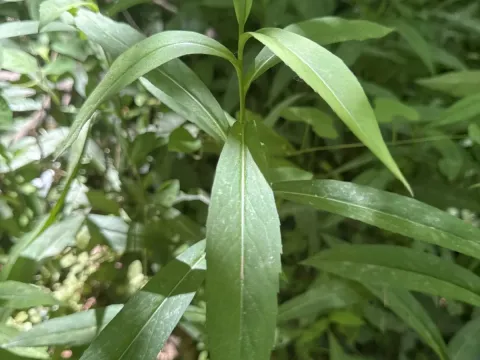
Giant goldenrod
Solidago gigantea
Giant goldenrod (Solidago gigantea) is a robust perennial herb belonging to the Asteraceae family. It is primarily propagated vegetatively through the division of its vigorous rhizomes, ensuring quick establishment and consistent quality.
What the section contains
Giant goldenrod
Planting is best performed in early spring once the soil is workable or in early autumn. When establishing a new field, it is crucial to ensure the site is clear of perennial weeds to prevent competition during the initial growth phase.
For seed-based propagation, sowing is done in late autumn to allow for natural stratification over winter, which significantly improves germination rates in the following spring.
A density of approximately 4–6 plants per square meter is recommended to establish a productive stand that can effectively occupy the space and suppress competitive species.
Because the plant spreads via rhizomes, field layouts should include permanent perimeter barriers or buffer zones to contain the plant within the designated cultivation area and prevent unauthorized spread.
Giant goldenrod is highly adaptable but thrives best in fertile, moisture-retentive loamy soils. It is particularly well-suited for low-lying areas or riverbanks where its high water requirements are naturally met.
The plant prefers full sun to light shade. Adequate light exposure is essential for high nectar production, which is the primary reason for its cultivation in many apiary settings.
Soil pH should ideally be neutral or slightly acidic. Although the plant is quite hardy, soil enrichment with phosphorus and potassium prior to planting will help support the development of strong flowering stems.
Cold hardiness is one of the key features of this species, allowing it to survive harsh winter temperatures without special cover. The underground rhizomes remain dormant and regenerate vigorously as soon as temperatures rise.
Water management is critical during the first growing season. Once established, the root system is deep and resilient, though consistent soil moisture remains the key to achieving maximum biomass yields.
As a late-summer honey plant, giant goldenrod is highly valued by beekeepers. A well-managed plantation can yield between 100 to 150 kg of honey per hectare, playing a vital role in sustaining bees before winter.
Biomass production is substantial, often reaching 20–30 metric tons per hectare. This makes the species an interesting candidate for bioenergy research or fiber extraction industries.
In medicinal cultivation, the harvest focus is on the inflorescences and leaves, which are collected during the peak flowering stage when active phytochemical concentrations are at their highest.
A stand typically remains productive for 5 to 7 years. After this period, soil depletion and root overcrowding usually lead to smaller flower heads and reduced nectar flow, necessitating site renewal.
Consistent yield requires periodic thinning or rejuvenation of the planting rows. Proper nutrient replenishment and weed control in the early years are standard procedures for maintaining high productivity levels.
Powdery mildew is the most common fungal issue for giant goldenrod, particularly in humid climates with poor air circulation. Improving plant spacing can help mitigate this risk significantly.
Rust infections on leaves can occasionally occur, impacting the quality of the harvested biomass. Monitoring and timely fungicide application (if necessary) are recommended for commercial crops.
Pests like aphids and leaf beetles can cause localized damage to soft tissues. Early detection is important, and biological pest control measures are often preferred to maintain the quality of nectar-producing plants.
Root rot is a potential danger if the plantation is situated in poorly drained soil. Proper site selection and drainage management are essential preventative measures against soil-borne pathogens.
Given its invasive potential in some regions, active management of goldenrod is essential. Prevention of seed dispersal beyond the plantation site is a critical environmental responsibility for any agricultural operation.
Harvesting for nectar or medicinal purposes should occur at the peak of the flowering season, typically between August and September, when the golden yellow flowers are fully open.
For herbal production, only the upper 20–30 cm of the flowering stems should be harvested. Using automated cutters or hand tools ensures efficiency while keeping the harvest clean and free from impurities.
Drying must be conducted in a well-ventilated, shaded environment. Excess heat and direct sunlight should be avoided to preserve the delicate essential oils and flavonoids within the floral material.
Once dried, the crop is threshed to separate the flowers from the stems. The final product is stored in airtight containers to maintain freshness and prevent moisture re-absorption.
Post-harvest residues should be managed carefully. Incorporating them into the soil can improve organic content, but caution must be taken to ensure no viable seeds are returned to the field to prevent uncontrolled spread.