
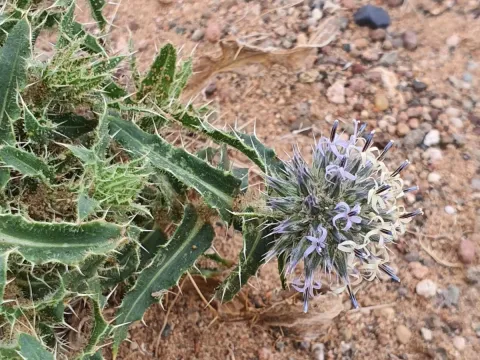
Gmelin's globethistle
Echinops gmelinii
Gmelin's globethistle is a perennial herbaceous plant belonging to the Asteraceae family. Sowing is typically carried out in late autumn or early spring, as soon as field conditions permit.
What the section contains
Gmelin's globethistle
Seed stratification is recommended to ensure uniform germination, which is why late autumn sowing is often preferred in agricultural practice.
The seeds should be planted at a depth of 1.5 to 3 centimeters, depending on the soil structure, to facilitate successful emergence.
Row cropping with spacing between 45 and 60 centimeters is recommended, allowing for easier maintenance and mechanical weed control.
The seeding rate varies based on seed quality and method, averaging between 5 and 8 kilograms per hectare for optimal density.
This crop is highly drought-resistant and cold-tolerant, making it suitable for cultivation in various steppe and forest-steppe climatic regions.
It thrives in well-drained soils, including chernozems and chestnut soils, where deep root penetration is supported by good soil structure.
Gmelin's globethistle requires full sun exposure; it is a light-demanding plant that does not perform well in shaded areas of the field.
It is generally undemanding regarding soil fertility, allowing it to be grown effectively on marginal lands where other crops might fail.
The optimal temperature for its active growth stage ranges from 20 to 25 degrees Celsius, ensuring robust plant development during the season.
The primary agricultural use of Gmelin's globethistle is as a superior honey-producing plant, providing nectar during the summer dearth.
Honey production can reach 300 to 500 kilograms per hectare, making it a highly profitable asset for commercial apiaries and beekeeping operations.
Seed production yields are approximately 5 to 8 centners per hectare when appropriate agronomic management practices are maintained.
The plant is also recognized for its medicinal potential, as its roots contain alkaloids used in the development of neurological treatments.
The plant establishes a strong root system during its first year, laying the foundation for sustained productivity in subsequent growing seasons.
Powdery mildew can occur in areas with high humidity, appearing as white patches on the foliage and reducing photosynthetic efficiency.
Weevils are known to damage flower heads, which directly impacts seed yield and the attractiveness of the blossoms to foraging honeybees.
Root rot represents a significant threat in poorly drained soils; implementing crop rotation is essential to prevent pathogen buildup.
Aphid infestations on young shoots can weaken the plants, necessitating early detection and integrated pest management strategies.
Proper field hygiene and avoiding excessive nitrogen fertilization can help mitigate many common disease-related issues in globethistle fields.
Harvesting should occur at full biological maturity, when the flower heads become dry, brittle, and start to release seeds easily.
Timing is critical to prevent seed shattering; farmers must monitor field conditions closely to begin harvest before significant losses occur.
Mechanical harvesting using combines with adjusted settings is effective for gathering seeds while minimizing mechanical damage to the crop.
Post-harvest processing involves thorough cleaning and drying of the seeds to reduce moisture content to below 14 percent for safe storage.
Seeds should be kept in well-ventilated, dry storage facilities to maintain high germination rates for future planting seasons.