
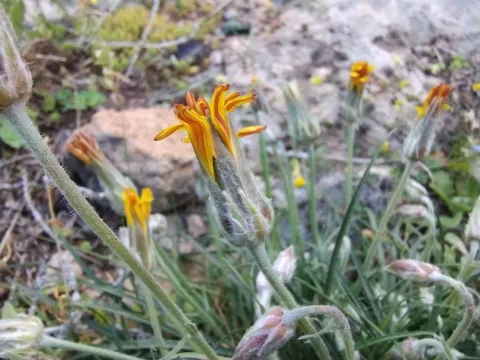
Cretan viper's-grass
Scorzonera cretica
Cretan viper's-grass (Scorzonera cretica) is a perennial herb belonging to the Asteraceae family. Sowing is best carried out in early spring as soon as the soil warms up, or in late autumn for an early harvest in the following year.
What the section contains
Cretan viper's-grass
Seeds should be planted at a depth of 2-3 centimeters. Maintain row spacing of 30-40 centimeters to ensure adequate air circulation and space for the foliage to develop fully during the growing season.
Germination is usually steady if the soil remains moist. Covering the seedbed with a thin layer of compost or mulch can help retain moisture during the initial stage of seedling development.
Because the root development is slow, weeding is essential in the early stages of growth to prevent nutrient competition and to ensure the plant has enough resources.
The plant is highly resilient, but for high-quality root production, thinning the seedlings to about 15 centimeters apart is recommended to provide each plant sufficient room.
This crop thrives in sunny locations with fertile, well-drained, and loose soil. Deep cultivation is necessary to prevent the root from becoming twisted or stunted, which affects market quality.
A soil pH between 6.0 and 7.0 is ideal. The plant is sensitive to highly acidic soils, so proper liming should be performed if testing indicates a low pH value before sowing.
The plant is frost-tolerant; however, in regions with harsh winters, a protective layer of mulch is beneficial to prevent the crown of the plant from suffering freeze-thaw damage.
Regular irrigation is required during dry spells, especially during the active growth phase. Avoid waterlogging, as standing water significantly increases the risk of rot diseases.
Fertilization should be moderate, focusing on organic matter. Excess nitrogen can lead to lush leafy growth at the expense of root enlargement and nutritional value.
Fungal diseases, including powdery mildew and root rot, are the most frequent threats, particularly in poorly ventilated or excessively damp environments.
Pests such as wireworms are highly problematic as they penetrate the root, creating holes that serve as entry points for pathogens and ruin the harvest quality.
Aphids can attack the young leaves during warmer months. Monitoring and using insecticidal soaps or biological control agents can effectively manage these populations.
Proper crop rotation is the primary defense strategy. Avoid planting in soils previously occupied by Asteraceae crops for at least four years to break pest and disease cycles.
Hygiene practices, such as removing infected plant debris and disinfecting tools, are vital for maintaining the long-term health of the crop in a garden or farm setting.
Harvesting usually occurs in late autumn, approximately 120-150 days after sowing, once the leaves show signs of turning yellow and dying back naturally.
It is important to use a garden fork to lift the roots carefully. The skin of the root is thin and easily damaged; cuts will lead to rapid decay during storage.
After harvesting, clean the soil from the roots and allow them to air dry in a shaded area. Store them in a cool, humid cellar at near-freezing temperatures to preserve quality.
The roots are highly regarded for their subtle, earthy flavor and nutritional density, often being compared to other gourmet root vegetables like salsify or parsnip.
The versatile nature of the plant allows for various culinary uses, and in some traditions, the young leaves are harvested throughout the season as a salad green.