
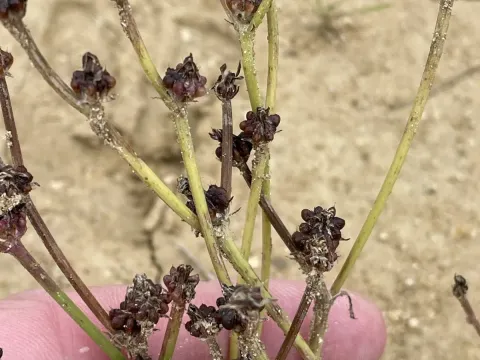
Crepis zacintha
Crepis zacintha
Crepis zacintha, known as wart-cress or Zacintha, is an annual herbaceous plant belonging to the Asteraceae family. Historically classified within the Crepis genus, this species is botanically distinct due to the unique morphological structure of its fruits, which feature characteristic protuberances.
What the section contains
Crepis zacintha
The plant is native to the Mediterranean region, where it thrives in rocky, arid, and well-drained soils. Its distribution spans parts of Southern Europe and Western Asia, where it typically grows as part of early-season ephemeral vegetation that capitalizes on seasonal rainfall.
Botanically, the plant develops a basal rosette of deeply toothed leaves, followed by erect, branched flower stems. The inflorescences consist of small, bright yellow flower heads. The fruits, or achenes, are the most diagnostic feature, covered in small, wart-like outgrowths that justify its scientific and common names.
In terms of agricultural and scientific interest, Crepis zacintha is a subject of study regarding plant adaptation to xerophytic conditions. While not widely cultivated as a primary agricultural crop, it remains a plant of interest for seed banks, botanical gardens, and specialized horticultural collections.
Understanding the biology of this species provides insights into the evolutionary strategies of Mediterranean Asteraceae. It is a hardy species that serves as a model for studying how certain annual plants survive extreme drought conditions during their reproductive cycle.
Seeds of Crepis zacintha should be sown during the autumn season in Mediterranean-type climates to allow for natural germination cycles.
For cultivation in controlled environments, seeds may be sown in early spring once the risk of severe ground frost has passed.
The seeds are small and should be sown near the surface, requiring light to optimize the germination rate and ensure healthy seedling emergence.
Maintaining proper spacing between plants is essential to prevent overcrowding and to ensure that each rosette has sufficient room to develop fully.
It is recommended to use a lightweight, well-draining substrate for sowing to prevent excessive moisture retention which could harm the seeds.
The species requires full solar exposure to flourish and complete its life cycle successfully throughout the growing season.
Soil conditions should be neutral to slightly alkaline, characterized by excellent drainage properties to prevent root decay.
Water requirements are relatively low; the plant is well-adapted to drier conditions and should not be subjected to heavy, prolonged watering.
The optimal growth temperature range is between 18 and 25 degrees Celsius, allowing the plant to reach its full maturity and seed set.
Regular weeding is necessary during the early stages of development to eliminate competition for vital soil nutrients and mineral resources.
Root rot is the primary threat to the vitality of Crepis zacintha, occurring mainly when soil moisture levels are maintained at an excessively high rate.
Powdery mildew can affect the leaves in conditions of poor air circulation, particularly in denser stands or high-humidity greenhouse environments.
Aphid infestations may target the flower stalks, potentially hindering the development of healthy seeds and reducing the overall reproductive capacity.
Leaf-eating insects can cause damage to the basal rosette during the early spring growth phase, requiring careful monitoring of the planting site.
Effective management requires prompt removal of diseased plant parts and maintenance of dry conditions around the collar of the plant to deter fungal growth.