
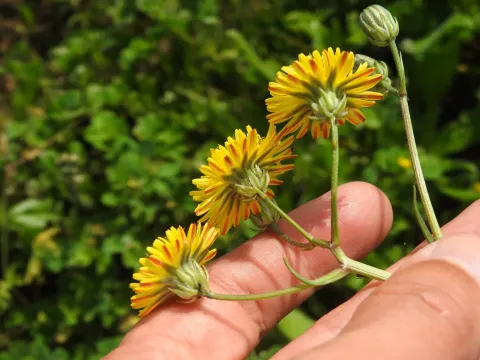
Crepis vesicaria
Crepis vesicaria
Crepis vesicaria, commonly known as beaked hawksbeard, is often managed as a wild or semi-cultivated herb. When cultivated, seeds are sown in early spring, once the soil has warmed sufficiently, usually around 5–8 degrees Celsius.
What the section contains
Crepis vesicaria
For optimal results in crop production, seeds are sown in rows spaced 30 to 45 centimeters apart. This spacing is crucial for reducing competition between plants and ensuring that each rosette receives adequate airflow.
Natural dispersal occurs through wind-borne achenes. In an agricultural setting, farmers must manage the seed bank carefully to prevent the species from spreading uncontrollably beyond the designated cultivation plots.
The sowing depth is critical for this species; seeds should be covered by no more than 1 centimeter of soil. Excessive depth can significantly inhibit germination, as the tiny seeds lack the energy to push through deep soil layers.
In regions with mild winters, autumn sowing is a viable practice. The seeds undergo natural stratification over the winter, leading to robust and early germination as soon as soil temperatures rise in the spring.
Crepis vesicaria is a member of the Asteraceae family. This annual or biennial herb thrives in full sun, which is essential for the development of its dense leaf rosettes and high nutrient profile.
It adapts well to various soil types, ranging from sandy loams to heavier clays, provided that drainage is adequate. Waterlogged conditions are detrimental and can lead to root rot and fungal infections.
The plant is relatively cold-tolerant and can withstand light spring frosts, which is advantageous for early-season planting. However, extreme heat can trigger premature bolting, shifting energy from leaf production to flowering.
Soil pH should ideally be neutral or slightly alkaline. While the species is not highly demanding regarding fertility, supplemental organic matter can enhance biomass production and leaf texture.
Its deep taproot allows for high drought tolerance compared to many other leafy crops. This feature enables the plant to access subsoil moisture during dry spells, maintaining leaf turgor for longer periods.
The biomass yield of Crepis vesicaria is largely dependent on the frequency of harvest and moisture availability. With proper irrigation, multiple cuttings of foliage are achievable within a single growing season.
Nitrogen-based fertilization increases the volume of the harvest, though it must be balanced to avoid reducing the palatability of the leaves. Over-fertilization can lead to soft, watery growth prone to damage.
Peak yield is achieved just before the bolting phase. Once the flowering stem begins to elongate, the leaves lose their tenderness, and the plant's overall quality for culinary or feed purposes declines.
Standardized trials suggest that when grown in optimal density, the crop can provide a consistent supply of green matter, making it a reliable option for specialized forage or market garden production.
Seed yield per plant is substantial. For those focused on seed production, allowing the plants to mature fully after the initial foliage harvest can result in a high volume of viable, easily collected seeds.
Powdery mildew is the most prevalent fungal threat for Crepis vesicaria, especially in environments with high humidity and poor ventilation. Consistent airflow is the best preventative measure against this pathogen.
Aphids are the primary insect pests, colonizing the undersides of the leaves. These insects cause leaf curling and extract sap, which can significantly weaken the plant if left untreated during the early vegetative stage.
Root-dwelling pests can occasionally impact young stands. Crop rotation and maintaining a healthy, weed-free field margin can help mitigate the pressure from soil-borne insects and diseases.
Chemical control is rarely utilized in this crop, as it is often favored for organic or niche cultivation. Integrated pest management, focusing on beneficial insects and biological controls, is the preferred strategy.
To ensure crop health, growers should monitor for signs of chlorosis or leaf spot, which may indicate poor drainage or nutritional imbalances rather than specific pest infestations.
The harvest for fresh foliage is conducted during the rosette stage. It is vital to time the harvest before the emergence of the central flowering stalk to ensure the leaves remain sweet and crisp.
Hand-harvesting or mechanical trimming is used to remove the leaves while keeping the crown intact. This allows the plant to potentially produce secondary growth, extending the harvest period.
Post-harvest management involves immediate cooling or processing, as the leaves are highly perishable. Proper temperature control prevents wilting and maintains the quality of the harvested produce.
Seed harvesting should be timed carefully when the seed heads turn brown. Farmers must be diligent to harvest before the seeds are released by the wind, which occurs rapidly once the achenes reach full maturity.
After collection, seeds must be dried in a well-ventilated, shaded area to prevent mold formation. Once dried and cleaned, they retain high viability if stored in cool, moisture-free conditions.