
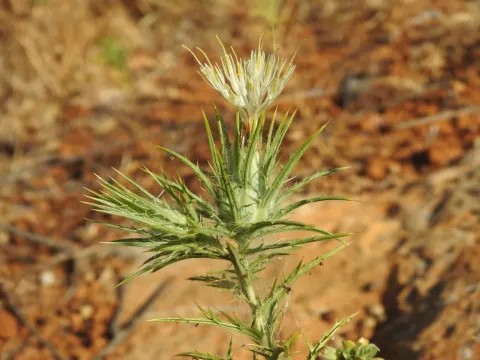
Cretan saffron
Carthamus creticus
Cretan saffron is a warm-season crop, so sowing should begin when the soil temperature at seeding depth reaches 10–12°C. In southern regions, early spring is the optimal time for planting, as soon as field equipment can operate.
What the section contains
Cretan saffron
Early sowing allows the crop to maximize the use of soil moisture stored during the winter, which is crucial for uniform seed germination. The typical seeding depth is 3–5 cm, depending on the soil type and moisture levels at the time of planting.
It is important to avoid excessively deep planting, as this can result in poor stand establishment and delayed emergence. The optimal plant density ranges from 200,000 to 300,000 plants per hectare to ensure maximum crop productivity.
Using a wide-row spacing (45–60 cm) simplifies field maintenance and weed control during the vegetative stage. Drilling or narrow-row spacing is practiced less frequently, mainly on weed-free fields or in areas with sufficient precipitation to suppress weed growth.
The crop possesses high germination energy; however, cold and wet conditions can delay emergence. Using high-quality treated seeds is a standard requirement to ensure uniform and vigorous seedling development across the field.
Carthamus creticus belongs to the Asteraceae family and is a native of the Mediterranean, which determines its high requirements for light and heat. It is an exceptionally drought-tolerant plant capable of enduring long periods without rainfall due to a deep taproot system.
The crop prefers fertile, well-aerated soils but can be successfully grown on chernozems, chestnut soils, and even saline conditions. Heavy clay soils prone to waterlogging are unsuitable for this species due to the risk of root rot and poor aeration.
The optimal temperature for growth and development ranges from 20°C to 30°C. Despite this preference, the plant displays remarkable resilience under hot, dry wind conditions, maintaining leaf turgor even when relative humidity is extremely low.
In crop rotation, Cretan saffron is considered an excellent predecessor for cereal crops, as its deep roots help improve soil structure. It does not require intensive chemical inputs and responds well to moderate applications of phosphorus fertilizers.
A key requirement is the protection against weed competition during the first month after emergence. Mechanical inter-row cultivation not only eliminates weeds but also breaks the soil crust, promoting better gas exchange in the rhizosphere.
The yield of Cretan saffron depends significantly on weather conditions during the growing season, particularly moisture availability during the flowering and seed-filling stages. In favorable years, the crop can produce yields of 1.5 to 2.0 metric tons per hectare.
The productive potential is largely determined by the number of flower heads per plant, which can range from 10 to 50. Genetic factors of the variety and the quality of agronomic practices are the primary drivers of successful production.
Under irrigated agriculture, yields can increase, although excessive watering often reduces the oil content in the seeds. Average oil content in safflower seeds typically ranges between 30% and 40%, depending on growing conditions and local climate.
Oil output depends not only on the variety but also on the full maturation of the fruits, making the selection of the harvest time critical. The product is used for both technical purposes and the food industry, thanks to its high linoleic acid content.
Breeding efforts focus on increasing seed size and reducing hull percentage, which directly correlates with the final output. Maintaining optimal plant density minimizes intra-specific competition for nutrients and ensures a more uniform maturation process.
Rust is one of the most dangerous pathogens for this crop, affecting leaves and stems and significantly reducing the photosynthetic area of the plant. Infection with this fungal disease leads to premature drying and a sharp decline in overall harvest yields.
Root rots pose a serious threat during early developmental stages, especially if planting occurs in cold, waterlogged soil. Seed treatment with fungicides before sowing is the primary preventive measure against various soil-borne infections.
Pests such as the safflower fly and various aphid species can cause significant damage to the plant's reproductive organs. The safflower fly lays eggs in the buds, and the larvae consume the developing seeds, leading to substantial losses in product quality.
To control harmful insects, authorized systemic insecticides are applied during periods of peak flight or infestation. Ecological pest management strategies include maintaining proper spatial isolation between safflower fields planted in different years.
Disease prevention requires strict adherence to crop rotation, returning the crop to the same field no earlier than after 3–4 years. Harvesting at the optimal time helps avoid secondary contamination of seeds by pathogenic microflora in field conditions.
Harvesting begins when physiological maturity is reached, when the flower heads turn brown and the seeds become hard with a characteristic luster. At this stage, the moisture content of the seeds should ideally be between 10% and 12%.
Timely harvesting is essential, as delaying on the stalk can lead to seed shattering, especially if high winds occur. Modern combines with adjusted cutter bars allow for minimized losses during direct harvesting operations.
In regions with uneven ripening, desiccation may be used to accelerate plant drying and allow for a more compressed harvest window. This practice promotes uniform seed maturation and reduces the costs associated with post-harvest grain drying.
After collection, seeds must be cleaned of impurities and sorted using mechanical separators. Storing Cretan saffron seeds requires dry, well-ventilated warehouse facilities, as high humidity can trigger self-heating and mold development.
With proper organization of the harvest and storage process, the quality of the safflower yield remains stable for a long time. Modern post-harvest processing technologies ensure that the final product meets market standards for quality and purity.