
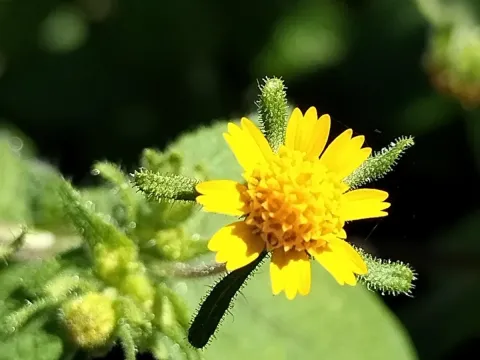
Sigesbeckia agrestis
Sigesbeckia agrestis
Sigesbeckia agrestis is an annual herb belonging to the Asteraceae family. Sowing is typically performed in the spring, once the soil has warmed up to 12–15 degrees Celsius, ensuring optimal conditions for germination.
What the section contains
Sigesbeckia agrestis
Seeds should be sown at a shallow depth of approximately 1–2 centimeters. This depth allows for the proper balance of moisture and oxygen, which is essential for uniform seedling emergence in field conditions.
Depending on the cultivation strategy, row spacing usually varies between 30 and 50 centimeters. Narrower spacing is preferred for biomass production, while wider spacing is more suitable for seed multiplication.
Preparing a fine tilth seedbed is critical for this species. Removing surface debris and creating a loose soil structure facilitates better root penetration and early plant establishment.
Following the emergence of seedlings, thinning may be necessary if the sowing density is too high, ensuring that individual plants have enough space to develop their characteristic branching structure.
This crop thrives in well-drained, fertile loam or sandy-loam soils with a neutral pH level. Soil drainage is of paramount importance as waterlogging can quickly lead to root rot and poor plant health.
Exposure to full sunlight is vital for the development of Sigesbeckia agrestis. High light intensity is correlated with the higher concentration of secondary metabolites found in the plant tissues.
The water requirements are moderate but must be consistent. Irrigation should be managed to keep the soil moist but not saturated, especially during the peak growth phases of the plant.
Temperatures ranging from 20 to 25 degrees Celsius are considered optimal for the vegetative phase. Extreme heat may cause the plant to flower prematurely, which significantly reduces the harvest quality.
Fertility management should focus on balanced NPK applications. Excessive nitrogen levels should be avoided to prevent lush but flimsy growth, which makes the plants more vulnerable to lodging and pests.
Aphids are the most common pests affecting this crop, often colonizing the undersides of leaves and the growing tips. Biological control agents like ladybugs can be effective in managing these populations.
Powdery mildew is a prevalent fungal issue, characterized by white, dust-like spots on the foliage. It spreads rapidly in high-humidity environments with poor airflow, necessitating regular crop monitoring.
Root rot, often caused by over-irrigation and poor drainage, remains a significant threat. Improving soil aeration through mechanical cultivation helps mitigate these risks significantly.
Weed management is essential during the early stages of growth as the plants are not very competitive. Mechanical weeding or the use of mulch can effectively suppress weeds without damaging the crop roots.
- Monitor for aphid clusters regularly.
- Apply fungicide sprays only if an outbreak is confirmed.
- Maintain proper spacing for air circulation.
Harvesting Sigesbeckia agrestis is best timed with the full-bloom stage, which usually occurs mid-summer. Harvesting at the peak of flowering ensures the highest levels of active chemical components.
Plants are harvested by cutting the aerial parts about 10–15 centimeters above the ground. It is important to harvest during dry, sunny weather to ensure the plants are free of dew or surface moisture.
Post-harvest, the plant material must be dried immediately in a shaded, well-ventilated area. Rapid drying prevents the degradation of delicate compounds and helps retain the plant's natural color.
Once dried, the herbs should be processed to remove any impurities or woody stems that do not meet the quality standards. Proper sorting ensures a higher market value for the raw herbal material.
Storage should take place in a cool, dark, and dry environment. Using airtight containers protects the harvested crop from moisture absorption and oxidation, maintaining its shelf-life and efficacy.