
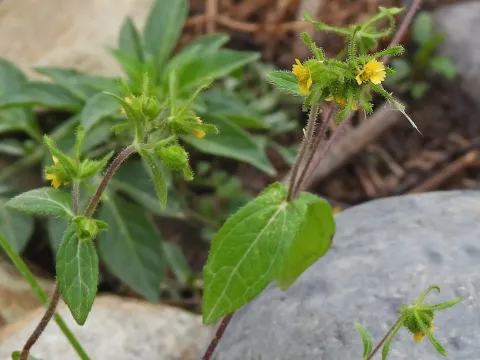
Sigesbeckia jorullensis
Sigesbeckia jorullensis
Sigesbeckia jorullensis is a versatile herbaceous plant within the Asteraceae family. Known for its specific phytochemical profile, it is becoming an increasingly interesting candidate for specialized agricultural production in various temperate regions.
What the section contains
Sigesbeckia jorullensis
The sowing process begins in early spring once the risk of frost has passed and soil temperatures consistently reach 12-15 degrees Celsius. Precise row spacing of 50-60 centimeters is recommended to facilitate optimal plant growth and ease of field maintenance.
Seed depth should remain shallow, roughly 1 to 2 centimeters, as the seeds require sufficient light exposure for successful germination. Light irrigation post-sowing helps settle the soil and promotes uniform emergence of seedlings across the planting bed.
Initial growth is relatively slow, making early-season weed management critical for the crop's establishment. Mechanical weeding between rows is effective during the first weeks until the canopy closes, providing natural shading that suppresses weeds.
By providing adequate space and ensuring a clean start, growers can achieve higher uniformity in biomass, which is essential for consistent harvesting cycles and industrial processing requirements.
Successful cultivation of Sigesbeckia jorullensis requires well-drained, fertile soil with a neutral pH. Waterlogged fields are highly detrimental, leading to root rot and significant yield loss; therefore, field selection must account for drainage capacity.
This crop thrives in sunny, open locations with consistent exposure to direct sunlight. While it can adapt to partial shade, full sun is generally preferred to maximize the plant's metabolic activity and secondary metabolite synthesis.
Water requirements are moderate, but consistent moisture is essential during the vegetative development phase. Using precision irrigation systems allows growers to maintain stable soil moisture levels, which prevents stress-induced developmental halts.
Fertilization should be handled with care, focusing on a balanced ratio of nitrogen, phosphorus, and potassium. Over-fertilization, especially with excessive nitrogen, can result in poor concentration of desired compounds and increased susceptibility to pests.
Temperature management is key for optimal productivity, ideally ranging between 18 and 25 degrees Celsius. In cooler regions, protected cultivation in greenhouses or plastic tunnels can extend the growing season and enhance the total yield.
Fungal infections, particularly powdery mildew and damping-off, represent the most common threat to crop health, especially under conditions of high humidity and poor airflow. Proper plant spacing is the primary cultural defense against these issues.
Pests such as aphids and spider mites can infest the foliage, particularly during dry spells. Regular scouting allows for early detection, which is crucial for managing populations before they cause widespread damage to the plant tissue.
Crop rotation practices are essential for preventing the buildup of soil-borne pathogens. Integrating Sigesbeckia jorullensis into a three-year rotation cycle effectively breaks the life cycles of most pests and diseases associated with the species.
Biological control agents, such as beneficial insects, can be utilized to manage pest populations without the need for synthetic chemicals, thus maintaining the high quality and purity required for medicinal applications.
Maintaining field hygiene, including the removal of infected debris after harvest, significantly lowers the potential for disease carryover to the next season, protecting the overall investment in the crop.
Harvesting should ideally occur at the onset of peak flowering, as this stage corresponds with the highest concentration of the plant’s active medicinal ingredients. Timing the harvest accurately is essential for maximizing product value.
Mechanical harvesting via mowing is the most efficient method for large-scale operations. It is recommended to perform this task during dry weather to prevent moisture-related quality degradation immediately after cutting.
Post-harvest handling requires immediate transfer to drying facilities. If material is left in piles, it can quickly heat up, triggering chemical breakdown and reducing the shelf life and potency of the final dried product.
Drying is conducted in controlled environments at temperatures not exceeding 45 degrees Celsius to preserve the structural integrity of the plant and its volatile components. This ensures that the product meets high-quality standards.
Once dried to the appropriate moisture content, the crop is packaged in light-protected and moisture-resistant containers. This final stage is crucial for maintaining stability throughout the storage and distribution process.