
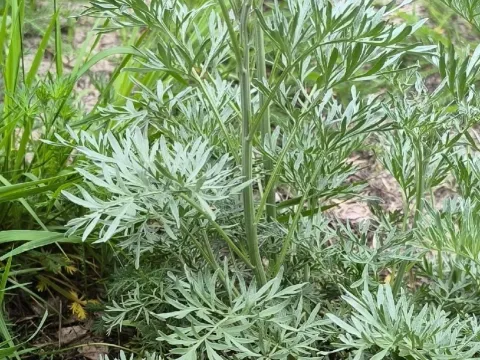
Sievers wormwood
Artemisia sieversiana
Sievers wormwood (Artemisia sieversiana) is an annual plant propagated by seeds. Sowing is best performed in early spring as soon as the soil warms up to 8–10 degrees Celsius, which is optimal for uniform and rapid seed germination.
What the section contains
Sievers wormwood
In commercial cultivation, seeds are sown in rows spaced 45 to 60 centimeters apart. This spacing facilitates mechanical inter-row cultivation and ensures that each plant receives adequate access to light and nutrients throughout the vegetative cycle.
The seeds are relatively small, so they should be planted at a shallow depth of 1–2 centimeters. Light rolling of the soil surface after sowing is highly recommended to improve soil-to-seed contact and maintain adequate moisture levels for the seeds.
While spring sowing is common, late autumn sowing can be viable in certain regions to take advantage of winter and early spring moisture. This method, however, requires careful site preparation and strict weed management during the early spring season.
The seeding rate typically ranges from 3 to 5 kilograms per hectare, depending on seed quality and germination energy. It is essential to avoid overly dense stands, as competition for resources can stunt plant growth and reduce overall biomass.
Sievers wormwood is a sun-loving plant that thrives in open areas with high light exposure. It is well-adapted to arid environments and shows remarkable tolerance to water shortages due to its deep and effective root system.
While the crop is not particularly demanding of soil fertility, it performs best on light, well-draining sandy loam or loamy soils. It has a high tolerance for alkaline or slightly stony soil conditions, provided that air circulation within the soil profile remains sufficient.
The plant is highly sensitive to waterlogging. Excessive soil moisture, especially in heavier clays, can lead to root rot and poor development. Therefore, selecting fields with excellent drainage is a critical agronomic requirement for successful farming.
This species exhibits strong cold tolerance, capable of withstanding the temperature fluctuations common in its native steppe habitats. However, extreme frosts during the vegetative growth phase can affect the accumulation of essential oils.
Good weed control is necessary during the early stages of plant establishment. Because the seedlings are relatively delicate, keeping the rows free from invasive vegetation ensures that the wormwood can establish a vigorous root system without competition.
The economic value of Sievers wormwood is derived from its harvested aerial parts, which contain active essential oils and flavonoids. Under typical growing conditions, yields of dried raw material reach approximately 15–20 centners per hectare.
Yield is heavily dependent on the harvesting timeline. The biomass must be collected at the onset of mass flowering to ensure the maximum concentration of pharmacological compounds within the plant tissues.
If harvesting is delayed, the plant stems become lignified and coarse, which significantly degrades the quality of the harvested product. Constant monitoring of the field is required to determine the exact peak of biological maturity.
The harvested green material is sensitive and should be processed as quickly as possible. Prolonged storage of fresh, damp material can lead to self-heating and the loss of volatile compounds, which are essential for its value.
Intensive farming techniques, including balanced nutrient management, can boost total yield. Applying moderate nitrogen levels during the early growing season can encourage biomass production without compromising the chemical composition of the plant.
Artemisia sieversiana possesses natural defense mechanisms, such as bitter compounds and essential oils, which provide a level of inherent resistance to many common agricultural pests. Nevertheless, the crop is not immune to specific threats.
Powdery mildew represents a significant fungal threat, especially in humid conditions or poorly ventilated stands. It manifests as a white coating on the foliage, significantly reducing the quality of the medicinal material and impacting overall plant health.
Aphids are the primary insect pests that colonize the growing tips and developing flower buds. Infestations can cause foliage curling and stunted growth, necessitating early detection and targeted biological or mechanical control measures.
Root rot is often a result of poor soil drainage or improper irrigation management. Avoiding waterlogged fields and practicing a consistent crop rotation program are the most effective strategies to prevent the buildup of soil-borne pathogens.
Preventative measures, such as maintaining proper spatial isolation from other Asteraceae species and using clean, disease-free seed, are crucial to reducing the risk of major outbreaks and ensuring the health of the commercial crop.
Harvesting should occur exactly when the plants enter the stage of mass flowering. During this period, the concentration of essential oils in the inflorescences and leaves is at its physiological peak, which is critical for medicinal use.
Mechanical harvesting is generally performed using forage harvesters or adapted grain combines, set to cut the plants at a height of approximately 15 centimeters. It is vital to avoid picking up the lower, woody parts of the stem.
The green mass should be transported to drying facilities immediately after cutting. Exposure to direct sunlight or prolonged time in the field causes the evaporation of volatile oils, leading to a direct loss in market value.
Drying is best accomplished in shaded, well-ventilated structures or industrial drying units at temperatures not exceeding 40 degrees Celsius. Maintaining these conditions ensures the retention of the plant's characteristic color and chemical integrity.
Once dried to the desired moisture level of 12–14%, the material should be sorted, cleaned of impurities, and packed in sealed containers. Proper storage in a cool, dry place protects the raw material from humidity and potential contaminants.