
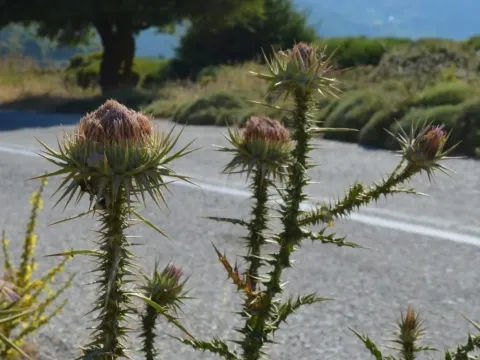
Onopordum caulescens
Onopordum caulescens
Onopordum caulescens is a biennial plant, and its sowing should be planned for early spring once the soil temperature is suitable for seed germination.
What the section contains
Onopordum caulescens
Successful establishment requires a well-prepared seedbed, ensuring that the soil is loose and cleared of debris to allow for optimal seed-to-soil contact.
Seeds should be sown at a shallow depth of about 1.5 to 2 centimeters to ensure they have enough energy to emerge through the soil surface.
Using a wide-row planting technique is recommended, as it allows for easier weeding and maintenance during the first season when the plant forms its large rosette.
Early sowing takes advantage of winter moisture, which is crucial for the development of the strong taproot system that supports the plant's future growth.
This species, a member of the Asteraceae family, is highly adaptable to various soil types, provided that the drainage is sufficient for healthy root development.
Onopordum caulescens thrives in full sunlight and requires open, unshaded areas to reach its maximum size and produce a high volume of flowers.
The plant is famously drought-tolerant, with its deep taproot capable of accessing groundwater, allowing it to survive in regions with hot and dry summers.
While the plant is not overly demanding in terms of soil fertility, it benefits from balanced mineral levels and is sensitive to compacted or waterlogged soils.
Temperature tolerance is high, as the species is well-adapted to varied climatic conditions, demonstrating robust performance even in colder temperate regions.
The primary economic value of Onopordum caulescens lies in its role as a late-summer nectar source, which is critical for supporting local honeybee populations.
In terms of forage, the plant produces significant biomass that can be utilized as a supplemental feed source, particularly in areas with limited grazing resources.
The density of the flowering stalks provides a concentrated resource for pollinators, making the crop highly beneficial for biodiversity conservation and apiaries.
Seed harvesting should occur when the flower heads turn brown and begin to dry, ensuring the highest possible yield of mature seeds for future seasons.
Sustainable cultivation allows for natural self-seeding, which helps maintain the stand density over several years without the need for constant reseeding.
Common plant health issues include powdery mildew, which can develop rapidly in dense stands during periods of high humidity and poor air circulation.
Root rot represents a significant risk if the soil remains excessively wet, emphasizing the importance of site selection and drainage management.
Insects such as aphids and weevils may target the flower buds and young foliage, potentially impacting the seed development and overall vigor of the crop.
Effective management includes regular monitoring of the planting site and the removal of secondary weed hosts that might harbor pests or diseases.
Biological pest control methods are preferred, especially given the plant's role as a major nectar source for sensitive pollinators and beneficial insects.