
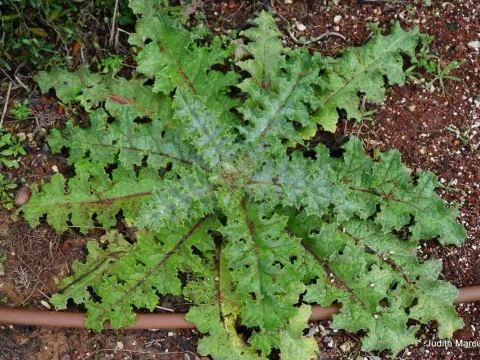
Onopordum carduiforme
Onopordum carduiforme
Onopordum carduiforme is typically sown in early spring as soon as the soil is workable. The soil temperature should reach at least 8–10 degrees Celsius to initiate successful germination of the seeds.
What the section contains
Onopordum carduiforme
Seeds should be planted at a depth of 2 to 3 centimeters. Proper soil contact is essential to ensure that the seedlings establish themselves quickly and can withstand initial competitive pressure from other flora.
Row spacing should be maintained between 45 and 60 centimeters. This provides sufficient space for the plant's expansive rosette and allows for easy mechanical weeding during the early stages of growth.
The seeding rate must be carefully calculated to avoid overcrowding, which can lead to reduced individual plant health and lower biomass production per hectare.
Preparing a fine seedbed is recommended for uniform emergence. Once sown, rolling the soil helps to stabilize the seeds and prevents wind erosion in open field conditions.
As a member of the Asteraceae family, Onopordum carduiforme requires full sun exposure to thrive. It performs poorly in shaded environments, which restricts its photosynthetic capacity and overall vigor.
The plant is highly tolerant of various soil types, including poor, rocky, and saline soils. It thrives particularly well in light, sandy, or well-drained loamy soils that prevent root saturation.
Drought tolerance is one of the most significant traits of this species. Its deep taproot allows it to access water sources unavailable to shallower-rooted crops, making it suitable for arid regions.
Onopordum carduiforme prefers a warm climate with an average temperature of 20 to 25 degrees Celsius during the growing season. It exhibits good resistance to the temperature fluctuations typical of steppe ecosystems.
Excessive soil moisture is the primary factor that hinders growth. Fields intended for this crop must have excellent drainage to avoid root rot and other moisture-related physiological disorders.
Aphids represent a common pest for Onopordum carduiforme, particularly during the early vegetative phase. These insects cluster on young leaves, draining plant energy and potentially spreading viral pathogens.
Fungal issues such as rust and powdery mildew are prevalent in humid conditions. These diseases are characterized by visible lesions or white dust on the foliage, which significantly reduces the plant's health.
Root rot is a major threat caused by prolonged waterlogging. Prevention relies on selecting well-drained planting sites and ensuring that the crop is not over-irrigated during the season.
Various stem-boring insects may occasionally impact the plant's stability. While rarely catastrophic, infestations can weaken the stalks, making them susceptible to lodging during high winds.
Integrated pest management strategies are recommended, focusing on maintaining field hygiene and promoting biodiversity to encourage natural predators of common thistle pests.