
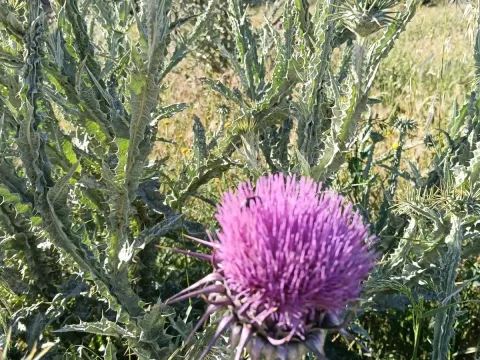
Onopordum macracanthum
Onopordum macracanthum
Onopordum macracanthum is typically established by seeds, which should be sown in the spring when soil temperatures reach stable, warmer levels for germination.
What the section contains
Onopordum macracanthum
Cultivation practices involve sowing in rows spaced approximately 50 to 60 centimeters apart to allow for proper plant development and mechanical weed control.
Seeds should be covered with a light layer of soil, not exceeding two centimeters, as they require proximity to the surface to germinate effectively.
Field preparation involves deep plowing followed by secondary tillage to create a uniform seedbed that ensures consistent contact between seeds and the soil.
Optimal sowing density is crucial to prevent competition within the row, allowing each plant to build sufficient biomass during its first year of growth.
This species is highly heliophilic and requires full sun exposure to thrive and develop the secondary metabolites essential for its medicinal value.
While the plant can adapt to various soil types, it performs best in well-drained, fertile loamy soils with a neutral pH level.
Onopordum macracanthum exhibits excellent drought tolerance, utilizing a deep taproot to extract water from lower soil profiles during dry summer periods.
The plant thrives in moderate to warm temperatures, with an optimal range between 20 and 25 degrees Celsius for rapid vegetative growth.
Waterlogging must be avoided, as stagnant soil moisture can inhibit root development and significantly increase the risk of crown rot and fungal infections.
Crop yields are largely determined by soil fertility levels and the effectiveness of row spacing management during the early stages of plant growth.
The harvestable components include both the leaves and the flower heads, which are used for extraction of various bioactive compounds and essential oils.
High seed production is a characteristic of this thistle, making it a viable crop for farmers looking to maintain self-sustaining cultivation cycles.
Regular weeding and nitrogen supplementation in the initial growth phase can significantly boost the overall green biomass yield per hectare.
Efficient management practices ensure a high-quality product, whether the crop is intended for the pharmaceutical market or as a source of biomass.
Onopordum macracanthum is naturally resistant to many common pests, primarily due to its dense, sharp thorns that act as a deterrent to herbivores.
Fungal pathogens such as powdery mildew can be problematic in humid conditions, necessitating proper air circulation and spacing within the plantation.
Integrated pest management strategies, such as crop rotation, are recommended to prevent the buildup of soil-borne pathogens and long-term pest cycles.
Regular field scouting is essential to identify potential threats early, particularly during the transition from the vegetative to the flowering stage.
Maintaining soil health through proper drainage is the primary defense against root diseases, which are the most significant threats to plant longevity.
The harvest timing is critical: vegetative parts are collected before flowering, while flower heads are picked at the beginning of the blooming period.
Mechanical harvesting of seeds requires specialized equipment to handle the thorny nature of the mature heads and to maximize recovery during threshing.
Immediate post-harvest drying is required to stabilize the chemical composition of the raw materials and prevent the degradation of bioactive components.
Proper storage involves keeping the dried product in moisture-controlled, cool, and dark warehouses to protect it from environmental stressors.
Quality control through cleaning and sorting post-harvest is essential to remove extraneous matter and meet industry standards for final processing.