
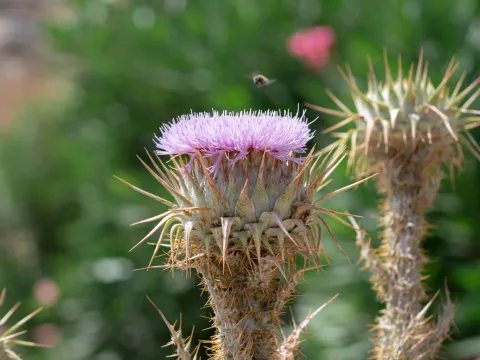
Onopordum bracteatum
Onopordum bracteatum
Onopordum bracteatum is a biennial plant that typically requires a period of cold stratification to germinate. Sowing should ideally be performed in late autumn to mimic natural winter conditions for the seeds.
What the section contains
Onopordum bracteatum
When cultivating in professional settings, seeds are sown at a depth of 1–2 cm. Shallow sowing is essential as the seeds are relatively small and require precise soil moisture levels to activate their germination processes.
Spring sowing is possible only if the seeds have been artificially stratified in a refrigerator for at least 30 to 45 days. Without this chilling step, germination will be sparse and unpredictable across the field.
For optimal development, maintain rows spaced 45–60 cm apart. This spacing is vital to allow the large, prickly rosette of leaves to develop fully during the first year of the plant's life cycle.
Once seedlings emerge, selective thinning is necessary to ensure each plant has enough nutrients. Removing weaker seedlings allows the strongest specimens to thrive, resulting in healthier, larger flower stalks in the second year.
Belonging to the Asteraceae family, Onopordum bracteatum thrives in open, sunny environments. It is highly intolerant of shade and requires full sun exposure to maintain its vigorous growth rate.
The plant is adapted to a variety of soil types but performs best in well-drained, sandy loam soils. Good soil aeration is crucial for the health of its robust taproot, which is sensitive to waterlogged conditions.
This species is exceptionally drought-tolerant. Once established, it can easily survive dry spells, making it an excellent candidate for marginal lands where moisture levels are often unpredictable or low.
Soil pH preference is broad, though slightly alkaline soils are ideal. Because it is a deep-rooted species, it does not require significant fertilization and can often scavenge necessary nutrients from deeper soil horizons.
Climate requirements include a stable moderate to hot growing season. The plant is hardy enough to withstand winter temperatures in temperate regions, provided the soil is not prone to flooding or freezing-thawing cycles that can heave the roots.
Aphids are the most common pests observed on Onopordum bracteatum, often clustering on the flower heads. While usually not fatal to the plant, they can suck essential juices and potentially transmit viral infections.
Powdery mildew is the primary fungal threat, particularly in humid or stagnant air conditions. Ensuring good ventilation between plants through correct spacing is the most effective way to prevent outbreaks.
Root rot occurs if the plant is grown in compacted, heavy soils with poor drainage. Once roots are compromised by fungal pathogens due to excess moisture, the plant's structural integrity is quickly lost.
Seed-feeding insects may occasionally target the flower heads before the seeds fully mature. Monitoring during the flowering period is advised if the objective is to harvest the seeds for the next season's sowing.
In general, this plant is a robust competitor. It is rarely overwhelmed by common field weeds, meaning that chemical control is seldom required if proper cultural practices are followed from the start.