
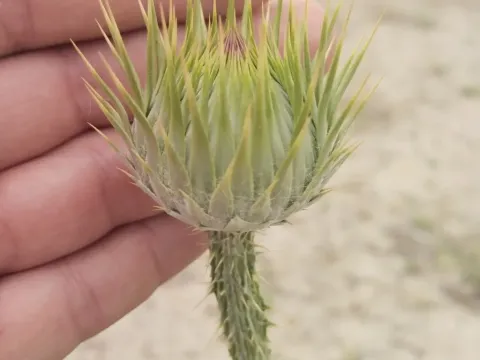
Onopordum leptolepis
Onopordum leptolepis
Onopordum leptolepis is a biennial herbaceous plant belonging to the Asteraceae family. In agricultural practices, seeds are typically sown in early spring as soon as the soil warms up to 8-10 degrees Celsius.
What the section contains
Onopordum leptolepis
In regions with milder winters, autumn sowing is also an option, as the seeds undergo natural stratification, which promotes more uniform germination in the following season.
The planting depth is generally 2-3 centimeters, depending on the soil structure, ensuring that the seeds maintain proper contact with the soil for better moisture retention.
A row spacing of 60-70 centimeters is recommended to allow sufficient space for the basal leaf rosette to develop during the first year of the plant's life cycle.
Targeting a plant density of 40,000 to 50,000 plants per hectare ensures optimal resource utilization while minimizing overcrowding and competition for nutrients.
This species is highly photophilous and thrives in full sun exposure. Shaded areas should be avoided as they lead to weak stem development and reduced bioactive compounds.
It prefers well-drained fertile soils, such as chernozems or sandy loams, but exhibits remarkable tolerance to a wide range of soil types due to its deep taproot system.
Onopordum leptolepis is well-known for its exceptional drought resistance, making it an excellent candidate for cultivation in arid and semi-arid agricultural zones.
The plant performs best under temperature regimes ranging from 20 to 28 degrees Celsius, though it is quite resilient to the sharp temperature fluctuations of steppe climates.
Strategic application of potassium and phosphorus fertilizers can enhance the plant's structural integrity and increase seed yield, which is critical for both agricultural and industrial use.
The economic value of the crop is primarily derived from its seed production and biomass. Under optimal management, seed yields can reach 8 to 12 decitonnes per hectare.
As a significant honey-producing plant, it provides a consistent nectar flow, which is particularly valuable to apiculture during mid-summer dry periods when other sources are scarce.
Processed green biomass can be utilized in livestock feed formulations, although the presence of prickles requires mechanical shredding before the plant can be incorporated into diets.
There is a steady market demand for its components in the pharmaceutical industry, where extracts are utilized for their distinct bioactive properties.
Successful yield outcomes are highly dependent on rigorous weed control measures during the initial vegetative stage, as the plant grows slowly in its first year.
Primary pests include various species of weevils and aphids that target the budding flowers, which can significantly jeopardize seed production if not monitored.
Fungal diseases like powdery mildew and various rusts may affect the plant during seasons of high humidity and poor airflow, requiring timely preventative measures.
Root rot is a common issue in poorly drained, waterlogged soils, which can suffocate the roots and lead to plant decline or mortality.
Competition from aggressive weed species during the establishment phase is the most common threat to crop success and often dictates the initial survival rate of the stand.
Integrated pest management strategies, involving rotation and physical removal of symptomatic plants, are recommended to maintain the health of the field without excessive pesticide use.
Harvesting for seeds occurs when the flower heads reach full maturity, indicated by a deep brown color and easy detachment of seeds from the receptacle.
Mechanical harvesting via combine or swathing and pickup is the standard method, allowing for efficient collection and low-moisture seed storage.
For medicinal purposes, the aerial parts should be harvested at the onset of flowering, when the concentration of essential chemical compounds is at its highest.
Personal protective equipment, specifically heavy-duty gloves and thick clothing, is mandatory during harvest to protect workers from the plant’s formidable spines.
Post-harvest processing involves rapid drying to maintain the quality of the raw material and prevent degradation of bioactive components during storage.