
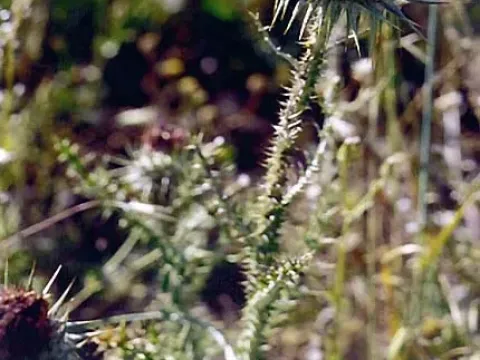
Onopordum macrocephalum
Onopordum macrocephalum
Onopordum macrocephalum is a biennial herbaceous plant belonging to the Asteraceae family. During its first year, the plant develops a large basal rosette of leaves, while in the second year, it produces a tall, branching flower stalk.
What the section contains
Onopordum macrocephalum
Seeds should be sown in early spring once the soil temperature reaches approximately 8–10 degrees Celsius. Autumn sowing is also an option in milder climates, as it allows for natural stratification during the winter months.
The seeds should be planted at a depth of 1–2 centimeters in well-drained, loose soil. Maintaining a row spacing of 60–70 centimeters ensures optimal airflow and prevents the overcrowding of the large basal rosettes.
As the seedlings emerge, it is essential to thin them out, leaving approximately 40–50 centimeters between individual plants. This spacing promotes healthier development and higher seed or biomass yields.
Young plants require consistent moisture during the establishment phase. Once the deep taproot system is fully developed, the plant becomes exceptionally drought-tolerant and resilient to environmental stressors.
This species thrives in full sun exposure. It is highly sensitive to shading, which can severely stunt its growth and reduce the number of flower heads produced during the flowering season.
The plant is not particularly demanding regarding soil fertility but performs best in loamy or sandy soils with a neutral or slightly alkaline pH. Proper soil drainage is critical to prevent the taproot from rotting.
Due to its evolved drought resistance, Onopordum macrocephalum can be successfully cultivated in arid or semi-arid regions. It is well-suited for marginal lands where moisture levels are insufficient for more sensitive crops.
The climate should be temperate to warm, as the plant can easily handle fluctuations in temperature. However, it is important to avoid waterlogged sites where excessive humidity could favor the development of fungal pathogens.
While fertilization is generally not required for growth, a light application of phosphorus-rich fertilizer in the second year can boost flower production and improve the overall quality of the harvested material.
Onopordum macrocephalum is valued for both its medicinal properties and its significance as a honey-producing plant. The flower heads are rich in nectar, making them a preferred forage source for local honeybee populations.
In terms of medicinal use, the leaves and flower heads contain bioactive compounds with potential antihypertensive and diuretic properties. These parts are typically harvested at the peak of the flowering period.
The plant can also function as a soil stabilizer on eroded slopes. Its substantial biomass, left on the field after harvest, contributes to improving soil structure and organic matter content over time.
Seed production is prolific, with each plant capable of producing a large volume of seeds. This high output makes the crop sustainable even in environments with high competition from other vegetation.
For commercial growers, the primary economic output consists of dried flower heads used in pharmaceutical applications, as well as the high-quality honey derived from its pollen and nectar.
Common pests include aphids and various beetle species that target the flower buds and leaves. These pests can significantly diminish the quality of the raw material if not monitored during the flowering stage.
Powdery mildew represents a major fungal threat, particularly in regions with high humidity or poor air circulation. Providing adequate spacing between plants is the most effective cultural control method.
Rust diseases can occur under unfavorable weather conditions. If infected tissues are identified, they should be removed and disposed of immediately to prevent the spread of spores to healthy parts of the crop.
Root rot is often a symptom of poor soil management, specifically in areas with water stagnation. Ensuring a well-draining soil profile is the best preventative strategy against this physiological issue.
Integrated pest management is recommended, focusing on the use of beneficial insects rather than synthetic pesticides, as the presence of bees during the flowering phase is crucial for biodiversity and yield.
Harvesting for medicinal use occurs during the peak flowering stage when the heads are fully open. This timing is essential for maximizing the concentration of therapeutic compounds in the plant tissue.
Plants should be cut during dry, sunny conditions. Processing wet material increases the risk of contamination and molding, which can compromise the entire harvest's shelf life and quality.
Sharp garden shears should be used for cutting to ensure clean wounds on the stalks. This prevents crushing the stems, which helps maintain the plant's structure and facilitates easier handling.
Drying should be conducted under a well-ventilated cover, away from direct sunlight, at temperatures not exceeding 45 degrees Celsius. Proper drying preserves the essential oils and color of the material.
Seed harvesting is performed once the flower heads turn brown. The heads are collected, dried further, and threshed, followed by a cleaning process to remove the pappus and other debris before storage.