
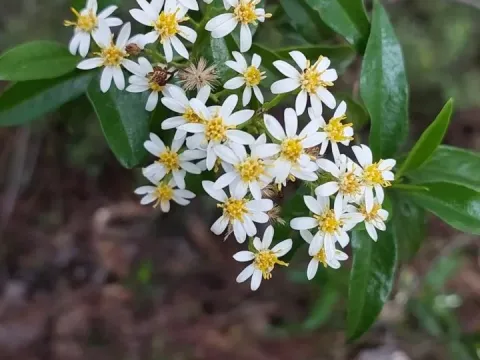
Olearia elliptica
Olearia elliptica
Olearia elliptica is a perennial evergreen shrub belonging to the Asteraceae family. Native to Australia, it is well-adapted to coastal conditions, featuring elliptical leaves and a dense, bushy growth habit that makes it a popular choice for ornamental landscaping.
What the section contains
Olearia elliptica
The crop thrives in well-draining, fertile soils with a slightly acidic to neutral pH level. Proper soil structure is essential for this species, as stagnant water in the root zone can be lethal, necessitating the installation of gravel or sandy drainage layers in heavier soils.
Regarding climate, Olearia elliptica prefers full sun exposure to maintain its compact shape and promote healthy flowering. It is not cold-hardy and requires protection from frost and severe freezing temperatures, which can severely damage its foliage and woody stems.
Agricultural management includes a consistent watering schedule during the growing season. While established plants show some tolerance to dry periods, regular irrigation is recommended to prevent stress and maintain the aesthetic quality of the evergreen foliage.
Pruning is a critical agrotechnical practice for this species. It should be performed annually after the flowering cycle to shape the shrub, remove dead wood, and encourage the development of dense, new growth which keeps the plant vigorous and visually appealing.
Fungal infections pose the primary biological threat to Olearia elliptica, particularly in humid or overcrowded conditions. Powdery mildew can quickly spread across leaves, causing them to yellow and drop prematurely if left untreated.
Pests such as spider mites and scale insects are common in dry environments or when the plant is kept under stress. Regular inspections of the foliage and stems are necessary to catch early infestations before they lead to structural damage.
Root rot is a significant danger linked to improper moisture management. Excessive watering, combined with poor drainage, creates a perfect environment for soil-borne pathogens that destroy the root system and kill the shrub from within.
Implementing a proper nutrient program helps build the plant's resistance to environmental stressors and diseases. Providing sufficient micronutrients is as important as the primary NPK fertilizers for maintaining overall plant vigor.
Sanitation practices, such as removing fallen leaves and pruning away infected branches, are essential to reduce the inoculum pressure in the garden. Keeping the base of the plant clear and airy is a simple yet effective way to manage potential disease outbreaks.