
Leucophyta brownii
Leucophyta brownii Cass.
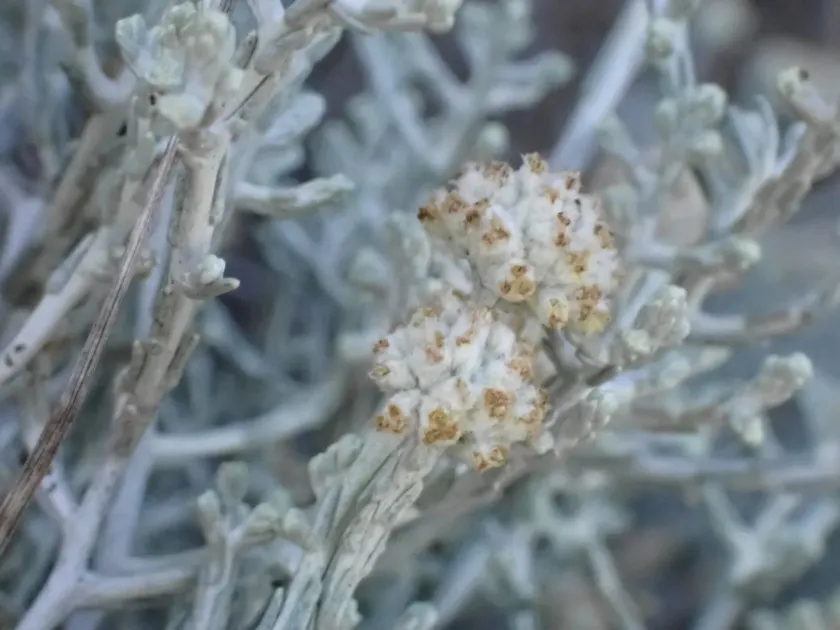
Description
Growing requirements
Leucophyta brownii, commonly referred to as the cushion bush, is a fascinating perennial shrub belonging to the Asteraceae family. Native to the coastal regions of Australia, it has evolved to thrive in harsh, saline-rich, and sandy environments along the coastline.
The botanical structure of the plant is highly distinctive, featuring a dense, tangled mass of silver-white stems that create a unique aesthetic appearance. This structure makes it an essential component for xeriscaping and sustainable landscaping, particularly in dry or maritime climates.
Agronomic requirements are focused on drainage and light. The plant demands a very well-drained, nutrient-poor substrate; any form of waterlogging will quickly lead to root decay and the death of the specimen, as its root system is not adapted to heavy moisture.
Regarding climate, this species prefers full sun and moderate temperatures. While it can withstand occasional salt spray and strong winds, it is not frost-tolerant, which limits its perennial outdoor cultivation to mild-winter zones or greenhouse environments.
Its primary commercial application is in the ornamental horticulture industry. It is highly valued by designers for its long-lasting color and unique texture, serving as a staple in modern gardens, container arrangements, and as a dried material in professional floral design.
Main diseases and pests
The most significant threat to Leucophyta brownii is physiological stress caused by poor soil drainage. Root pathogens often exploit waterlogged conditions to destroy the root system.
Fungal issues, such as powdery mildew or Botrytis, may emerge if the plant is kept in environments with high humidity and insufficient air circulation, which prevents the dense stems from drying out properly.
Pests are generally manageable, but aphids can occasionally infest new growth in protected or greenhouse environments, requiring monitoring and timely intervention.
To maintain plant health, it is essential to ensure that the potting mix or soil profile allows for rapid moisture dissipation after rain or irrigation events.
Implementing regular pruning can help improve air circulation through the center of the cushion-shaped bush, effectively reducing the risk of humidity-related pathogens.