
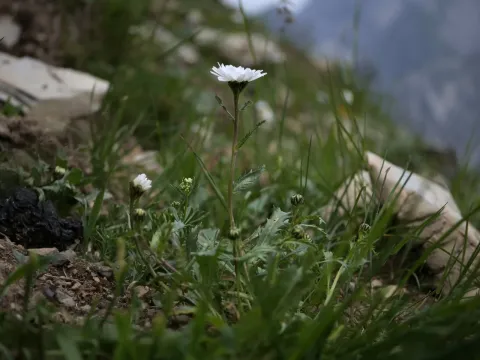
Haller's oxeye daisy
Leucanthemum halleri
Haller's oxeye daisy, a member of the Asteraceae family, is typically propagated through seeds or division of mature root clumps. Sowing in the open field is performed in late autumn or early spring once the soil temperature stabilizes above 10 degrees Celsius.
What the section contains
Haller's oxeye daisy
For greenhouse cultivation, seeds are sown in trays during March. Given their small size, seeds require minimal coverage with soil or vermiculite, as light is a critical factor for the germination process of this species.
Seedlings are transplanted to their permanent location once they reach the 3-4 leaf stage. A spacing of 30-40 cm between individual plants is necessary to ensure adequate airflow and reduce competition for soil nutrients.
The planting medium should be light and porous to facilitate the rapid establishment of the root system. Using a mixture of peat, perlite, and sand ensures that the drainage remains optimal during the early stages of growth.
Growth is moderate during the first year, focusing on the development of the basal leaf rosette. Flowering usually begins in the second season, as the plant needs sufficient biological reserves to produce high-quality blooms.
Haller's oxeye daisy requires full sun exposure to maintain its compact habit and prolific flowering. Shaded environments cause the stems to stretch and weaken, making the plant prone to lodging during heavy rains.
Well-drained, fertile soils with a neutral pH are ideal for this species. It is particularly sensitive to waterlogged conditions, which can lead to rapid decay of the root collar and susceptibility to soil-borne pathogens.
The plant is highly cold-hardy, reflecting its origin in alpine and mountain regions. It is well-adapted to cooler climates but requires protective measures or proper site selection to avoid frost heaving in early spring.
Watering must be consistent during the growth season, especially before and during the blooming period. However, irrigation should be carefully managed to avoid excessive humidity around the foliage.
Balanced fertilization with low-nitrogen formulas is recommended to promote flowering rather than excessive vegetative growth. Excessive use of nitrogen can result in lush foliage but fewer and shorter-lived flowers.
Powdery mildew is the most common fungal disease affecting Haller's oxeye daisy, especially in seasons with high humidity and poor air circulation. Symptoms include a white, powdery coating on leaves and stems.
Rust infections can appear as small reddish-brown pustules on the undersides of leaves. If left untreated, rust can severely stress the plant and reduce its aesthetic and physiological vigor.
Pests such as aphids and spittlebugs frequently target the succulent parts of the plant, including young buds. These pests can transmit viral infections in addition to causing direct feeding damage to the plant tissue.
Root rot, driven by stagnant water in the soil, poses a lethal threat to the species. Proper site preparation and the addition of coarse aggregates to the soil are essential preventative measures.
- Implementing systematic scouting to detect early signs of pest infestation.
- Applying broad-spectrum fungicides as a preventative measure in high-risk conditions.
- Weeding and cultivating the surrounding soil to improve gas exchange and reduce pest habitats.