
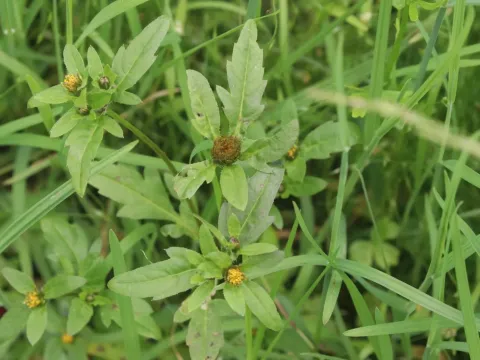
Hairy beggarticks
Bidens comosa
Hairy beggarticks is an annual plant that reproduces through seed dispersal. Its life cycle begins with germination in mid-to-late spring, once soil temperatures are sufficient for vigorous initial growth.
What the section contains
Hairy beggarticks
The seeds are capable of remaining dormant in the soil for extended periods, contributing to the persistent nature of this weed in agricultural fields. Proper timing for field operations is essential to interrupt the emergence of new seedlings.
Mechanical control, such as spring harrowing or shallow cultivation, is highly effective when applied to seedlings shortly after germination. This destroys the small root system before the plant can establish itself securely.
Crop rotation serves as a powerful tool in limiting the growth of this species. By planting dense crops that quickly canopy the soil, farmers can naturally suppress the development of weeds by limiting their access to sunlight.
Selective herbicide applications remain an option for high-density areas. It is recommended to treat at the early vegetative stage, specifically when the plant has two to four true leaves, to ensure maximum efficacy.
Belonging to the Asteraceae family, Bidens comosa favors habitats with high soil moisture content. It is frequently encountered along riverbanks, marshes, and low-lying areas of agricultural land that retain water.
The plant performs best in fertile, nutrient-rich soils but can adapt to a variety of textures, including heavy loams. Adequate drainage is preferred, although the species can tolerate short periods of waterlogging better than many crops.
Climate adaptability is a hallmark of this species, allowing it to flourish in temperate zones. It thrives during the warm summer months and demonstrates resilience against minor fluctuations in daily temperature.
Sunlight is an essential requirement for the maturation of its achenes. In shaded conditions, the growth rate of hairy beggarticks significantly decreases, making dense crop stands an effective natural competitor.
Soil aeration is vital for root health and overall development. Practices that improve soil structure and prevent compaction will inadvertently create a less favorable environment for this species to establish dominance.
Like many members of the Asteraceae family, hairy beggarticks is susceptible to various fungal pathogens, including powdery mildew, especially in humid and poorly ventilated conditions.
Aphids and various bug species often utilize the plant as a host, which can lead to viral transmission if the species grows in close proximity to sensitive agricultural crops. This makes weed control near field edges a priority.
Mechanical damage from various insects can stunt growth, but the plant's natural vigor often allows for quick recovery. Therefore, manual or mechanical removal is more reliable than relying on natural pest damage.
Preventive maintenance, such as mowing field borders and managing drainage ditches, significantly reduces the pressure from pests that use this weed as a refuge during the growing season.
Integrated pest management strategies are crucial for farmers dealing with infestations. Combining cultural practices with localized chemical control ensures that the population of Bidens comosa remains manageable without harming the main crop.